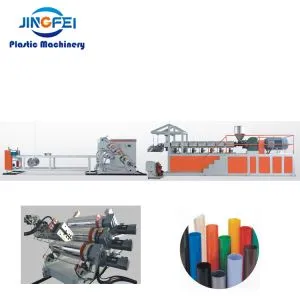
In today's industrial production, thermoforming technology plays an indispensable and crucial role, shining like a star. As a key processing technique, thermoforming is widely used across various industries. From everyday food packaging, such as disposable lunch boxes and beverage cups, to exquisite interiors in automotive manufacturing, and even the sturdy casings of electronic devices, thermoforming technology can be found everywhere. As an emerging processing technology and method, thermoforming has attracted considerable attention and favor due to its unique advantages. This technology not only gives products a unique appearance and meets various design requirements, but also enhances various product properties, such as improving strength and sealing, providing a solid technical foundation for the advancement of modern industry.
Thermoforming Type 1: Vacuum Thermoforming

The operating mechanism of vacuum thermoforming technology is influenced by atmospheric pressure. Subsequently, a heating device introduces gas at a certain temperature and humidity into the mold cavity to increase the pressure in the mold cavity, thereby rapidly melting and solidifying the plastic sheet into a single piece. More specifically, a vacuum pump is first used to rapidly extract air from the mold cavity, creating a near-vacuum environment within the cavity. Furthermore, because the plastic sheet itself has a certain degree of elasticity and toughness, the extrusion pressure can be varied during the extrusion process by adjusting the sheet thickness. Furthermore, a pre-heated, softened plastic sheet is placed above the mold. This creates a strong pressure on the softened sheet, forcing it to adhere to the mold's inner walls. This method makes it easy to produce plastic products with complex curves and irregular surface structures. As the sheet gradually cools and solidifies, the final product perfectly matches the mold's contours. This molding technique cleverly leverages the natural force of atmospheric pressure, resulting in a simple and efficient molding process.
Process Flow
1. Sheet Preparation: There are a variety of plastic sheet materials suitable for vacuum thermoforming, including polystyrene (PS), polyvinyl chloride (PVC), and polypropylene (PP). Therefore, selecting the appropriate sheet material for the product is crucial. Each plastic material has its own unique properties. For example, PS is prized for its exceptional clarity and processing characteristics, PVC for its flexibility and chemical resistance, and PP for its superior strength and high-temperature resistance. Achieving the desired product requires extensive experimental research, including analyzing the composition of each component in the formulation and exploring the influence of various process parameters. When selecting sheet material, we must not only consider the material's properties but also determine the most appropriate sheet thickness and dimensions based on the specific dimensions and shape of the finished product. Generally, sheet thickness that is too thin may reduce the strength of the final product, while excessive thickness may increase manufacturing costs and difficulty in forming.
2. Heating and Softening: Heating equipment is a critical step in the vacuum thermoforming process. Common equipment includes infrared heaters and hot air circulation ovens. Infrared heaters deliver heat quickly and evenly to the plastic sheet. By adjusting the heating power and duration, the softening level of the sheet can be precisely controlled. Hot air circulation ovens utilize the convection mechanism of hot air to ensure uniform heating of the sheet. Excessively high temperatures can cause the sheet to shrink, deform, or crack. During the heating process, the temperature and duration must be strictly controlled. If the temperature is too low, the sheet will not fully soften, making molding difficult. If the temperature is too high, the sheet may decompose and discolor, negatively affecting the quality of the final product.
3. After the sheet reaches the appropriate softening level, it should be quickly moved over the mold for vacuum forming. After a period of time, when the gap between the vacuum layer and the material increases to a certain value, the sheet is completely absorbed and fixed in the mold cavity. At this point, the vacuum pump begins to evacuate the air. As the air inside the mold is continuously extracted, the vacuum level gradually increases, and the softened sheet gradually adheres to the mold surface under the influence of atmospheric pressure. Controlling the vacuum level and determining the molding time are particularly critical during this process. Excessive vacuum can easily cause cracks, wrinkles, or breakage. If the vacuum level is not up to standard, the sheet material cannot be tightly bonded to the mold, which may result in surface defects such as wrinkles and bubbles on the product. If the molding time is too long, the sheet material may overcool and lose fluidity, thus affecting the molding effect.
4. Cooling and Demolding Process: The primary task of the cooling process is to ensure that the molded product cools quickly and sets its shape, thereby stabilizing its appearance. For thin-walled products, they must be inserted into the mold cavity before demolding. Mold and product cooling is typically achieved through a cooling water circulation system or air cooling. In actual production, controlling the cooling time can improve product yield. Before demolding, the cooling time should be appropriately adjusted based on the thickness of the product and the characteristics of the material used to ensure complete cooling. During the demolding process, extreme caution and care must be taken to prevent damage to the product surface, which could affect its overall appearance.
(II) Application Areas
Vacuum thermoforming technology is widely used in many industries, with food processing being a particularly important branch of this technology. In the food packaging industry, items such as disposable lunch boxes and beverage cups are mostly produced using vacuum thermoforming technology. This process involves heating the material to a certain temperature using vacuum equipment, applying pressure to form the material, and then cooling and demolding it to produce the finished product. This process can quickly and efficiently produce a wide range of uniformly shaped and well-sealed packaging containers, meeting the high packaging standards required by the food industry. Vacuum thermoforming is also frequently used in the production of everyday items such as plastic basins and buckets. This process offers advantages such as short processing time, low energy consumption, and stable product performance. Due to its low production cost and high efficiency, these everyday items have become affordable and accessible to many households. Vacuum thermoforming technology can also effectively improve product durability and service life. Furthermore, vacuum thermoforming technology plays a vital role in the production of electronic product casings, providing them with both aesthetically pleasing and practical protective housings.
Thermoforming Type 2: Pressure Thermoforming
Pressure thermoforming is an advanced forming method developed from vacuum thermoforming. This technology primarily utilizes heating in a vacuum furnace to process the material. Based on vacuum thermoforming, this equipment incorporates a pressure unit that applies greater pressure to the softened plastic sheet, ensuring a tighter bond between the sheet and the mold. Because the gas generated in the die is expelled from the mold cavity without affecting other materials, rapid, continuous production is possible without the need for heating. This method not only further improves product manufacturing precision but also allows for the production of more complex product shapes. Currently, pressure thermoforming is widely used in the production of various materials. Compared to vacuum thermoforming, pressure thermoforming offers superior control over sheet flow and filling, which helps reduce internal stress and defects, resulting in higher-quality finished products.
(I) Process Steps
1. Sheet and Heating: The sheet preparation and heating and softening steps in pressure thermoforming share many similarities with vacuum thermoforming. It is also important to select the appropriate plastic sheet and determine the heating temperature and duration based on the material's characteristics. During heating, it is crucial to ensure that the sheet softens evenly to prepare for the subsequent pressure forming process.
2. About Pressure Forming: Pressing equipment is a key component in the pressure thermoforming process, with hydraulic and pneumatic presses being the most common. Hydraulic presses utilize their hydraulic systems to generate strong pressure, allowing for precise control of the magnitude and duration of pressure application. Pneumatic presses generate pressure using compressed air, offering rapid response and convenient adjustment. Therefore, analyzing the distribution and variation of contact force between the sheet and the die under varying pressures is crucial for optimizing pressing process parameters and improving part quality. During the pressure forming process, it is essential to apply pressure evenly to the softened sheet to ensure uniform flow and filling within the die. Excessive pressure can easily deform the die, resulting in scrapped parts and reduced product yield. The forming effect is significantly influenced by the amount and duration of pressure applied. If the pressure is too low, the sheet will not fit completely within the die, resulting in low part precision. If the pressure is too high, the sheet may crack or the die may be damaged.
3. Cooling and Demolding: The primary purpose of cooling is to quickly cool and solidify the product. At the same time, the impact of mold temperature on product performance must be considered. When the mold reaches a certain temperature, thermal expansion can cause cracking and reduce product strength. During the pressure thermoforming process, the additional pressure applied increases internal stress within the product, necessitating a longer cooling period to eliminate this stress and prevent deformation after demolding. During demolding, appropriate demolding techniques and tools must be selected based on the product's appearance and the properties of the materials used to prevent damage.
(II) Application Scenarios
Pressure thermoforming technology, due to its high precision and excellent surface quality, has found widespread application in numerous industries with stringent product quality requirements. With the acceleration of socioeconomic development, demands for higher product performance are increasing. In the manufacture of automotive interior trims, such as dashboards and door panels, in addition to aesthetically pleasing appearance and smooth lines, they must also ensure sufficient strength and durability. Therefore, high-pressure hot melt processing is essential for the processing of automotive interior trim materials to ensure a dense internal structure and excellent mechanical properties. Using pressure thermoforming technology, we can meet these stringent standards and produce high-quality automotive interiors. Therefore, pressure thermoforming has become a key processing method in the automotive parts manufacturing industry. In the manufacturing of medical device housings, given the extremely high hygiene and precision requirements of medical devices, pressure thermoforming technology can ensure that the housings have good sealing and surface finish, providing the necessary guarantees for the normal use of medical devices. Therefore, pressure thermoforming technology has become an important production method in recent years. In addition, pressure thermoforming technology is often used in application scenarios such as high-end packaging to improve product quality and market competitiveness.

Type 3 of Thermoforming: Mold-to-Mold Thermoforming
(I) Principle Introduction
During the mold-to-mold thermoforming process, two matching molds-a male mold and a female mold-are used. A heating device is installed within the molds. A heated, softened plastic sheet is placed between the two molds, and the molds are closed to ensure the sheet is formed under the extrusion of the two molds. Mold-to-mold thermoforming is a rapid thermoplastic forming process that uses high-temperature gas as a heat source. This forming technology is particularly suitable for producing complex items with internal and external structures, such as toys with hollow designs and office supplies with internal compartments. Mold-to-mold thermoforming is an energy-efficient method for preparing thermoset materials, effectively saving energy and reducing product costs. Mold-to-mold thermoforming can form complex product shapes in a single operation, significantly simplifying subsequent manufacturing steps and improving overall production efficiency.
(II) Process
1. Sheet Preparation and Heating: Selecting the appropriate plastic sheet is crucial for ensuring the quality of mold-to-mold thermoforming. Generally, electric heating is used to preheat the sheet in the mold. When selecting plastic materials, ensure they exhibit excellent fluidity and moldability based on the specific product requirements. Appropriate heating should be performed to ensure uniform softening of the sheet material. During the heating process, particular attention should be paid to temperature control to prevent localized overheating or undercooling of the sheet material, which could affect the molding effect.
2. Mold Closing: The mold closing process plays a crucial role in the thermoforming process. Slow or insufficient mold closing speeds can affect part quality and production efficiency. Precise control of mold closing speed and pressure is essential during the mold closing operation. Too slow a speed can result in difficulty in material extrusion and poor demolding. Too fast a speed can prevent the sheet material from filling the mold cavity, resulting in material shorting. Therefore, process parameters such as mold temperature, roller speed, and pressure must be accurately determined to ensure consistent and stable part quality. Too slow a speed can cause the sheet material to cool excessively in the mold, resulting in a loss of fluidity. Excessive pressure can easily cause sheet deformation, impacting product quality. Controlling pressure is also crucial. If the pressure is insufficient, the sheet will not be fully extruded, resulting in insufficient strength in the product. Therefore, during the forming process, high mold temperature and appropriate press stroke should be maintained to achieve the required product precision and dimensional stability. Excessive pressure may damage the mold or the sheet may crack. Furthermore, it is necessary to ensure that the sheet flows and fills properly between the two molds to prevent defects such as bubbles and wrinkles.
3. Cooling and Demolding Process: Choosing the appropriate cooling method significantly impacts the quality of the final product. In actual production, air cooling or water cooling are generally used. Common cooling methods include water cooling and air cooling. In actual use, water cooling or air cooling are commonly used to cool products. Water cooling is very rapid and can effectively reduce production time. However, during this process, the temperature and flow rate of the cooling water must be strictly controlled to prevent product deformation due to uneven cooling. For molds, the thermal coefficient should be minimized during mold design to extend mold life and reduce production costs. Air cooling technology is relatively gentle and particularly suitable for products that do not require particularly high cooling rates. Therefore, in practical applications, the impact of mold structure and process parameters on product demolding must be considered. Demolding is the final step in the thermoforming process. Due to the complex shapes of molded products, demolding is relatively challenging. To reduce demolding complexity and ensure that the product is not damaged during demolding, mold release agents and appropriate draft angles can be considered.
(III) Practical Applications
Mold thermoforming technology has demonstrated excellent molding performance in various industries. In the automotive industry, mold heating has been widely used in the production of body panels. In the toy industry, toys such as plastic dolls and building blocks often have complex external shapes and internal structures. Mold thermoforming technology can easily produce these complex shapes, meeting the diverse needs of toy design. In medical device manufacturing, heating the mold can enhance the performance of medical instruments. In the production of office supplies, items such as folders and pen holders often utilize mold-to-mold thermoforming technology, resulting in unique appearances and practical functions. In automotive production, due to the high material performance requirements, traditional stamping processes struggle to achieve the desired product performance. However, utilizing mold cavities for injection molding or injection molding can achieve ideal results. Furthermore, in the manufacturing of industrial components, mold thermoforming technology also plays a key role in providing high-quality parts for industrial production.
Comparison and Selection of Three Thermoforming Types
(I) Performance Comparison
Considering product precision, pressure thermoforming, due to the application of additional pressure, allows the sheet to fit more closely to the mold, resulting in the highest product precision. Double-die extrusion molding through counter-die thermoforming also achieves high manufacturing precision. Vacuum thermoforming allows for the simultaneous formation of multiple or single-sheet strips, offering high production efficiency but complex processing. Vacuum thermoforming relies primarily on atmospheric pressure, resulting in relatively low product precision. From a surface quality perspective, both pressure thermoforming and counter-die thermoforming produce smooth, high-quality products. However, vacuum thermoformed products may exhibit minor surface defects due to factors such as uneven vacuum levels. From a production efficiency perspective, vacuum thermoforming offers simplicity and a shorter production cycle, resulting in higher production efficiency. Regarding mold structure, vacuum thermoforming can avoid mold deformation or damage, thereby improving product yield. However, pressure thermoforming and counter-die thermoforming require complex steps such as pressure control and mold closing, resulting in relatively low production efficiency. Therefore, different forming methods are suitable for different forming requirements. From a cost perspective, vacuum thermoforming equipment is not only simple but also relatively inexpensive. Pressure thermoforming is relatively expensive and prone to leakage during use. Pressure thermoforming requires additional pressure equipment, while mold thermoforming requires two separate molds, resulting in relatively high costs for both the equipment and the molds.
(II) Selection Criteria
When deciding on the type of thermoforming, we must comprehensively weigh various factors. Currently, pressure thermoforming is the predominant method in China. Vacuum thermoforming is a suitable option for products with simple shapes, low requirements for precision and surface quality, and high-volume production, as it achieves efficient production at a relatively low cost. Currently, molds are primarily produced using compression molding or injection molding in the domestic market. For products with stringent requirements for product precision and appearance, such as automotive interiors and medical device housings, pressure thermoforming better meets these requirements. Furthermore, due to the slow change in mold temperature, mold life is longer, a significant advantage over mold thermoforming. Mold thermoforming offers unique advantages for products with complex shapes and internal and external structures, such as toys and high-end office supplies. In the thermoforming process, mold design and manufacturing are crucial. Budget is also a key consideration, and companies need to choose the appropriate thermoforming type based on their own financial capabilities.