

Mold Spare Parts
Company Profile
Wenzhou Jingfei Plastic Machinery is located in Wenzhou Ruian, One of mostly famous Mechanism city. Our company is a manufacture of thermoforming machine, Our company is a technology innovation firm, Including machine designing, spare parts manufacture, installment, commission, and mold designing etc. Our company use modern professional management, carry out the concept “the best quality is the based of building reputation mostly important ”.during the processing, we hardly control the quality, reject all disqualification parts.
Why Choose Us
Our factory
Wenzhou Jingfei Plastic Machinery is located in Wenzhou Ruian, One of mostly famous Mechanism city. Our company is a manufacture of thermoforming machine, Our company is a technology innovation firm, Including machine designing, spare parts manufacture, installment, commission, and mold designing etc
Our products
We have thermoforming machine / extruder production line / vacuum forming machine / blister packaging line.
Production market
Our machine widely sale to USA, Greece, Serbia, Indonesia, Vietnam, Malaysia, Middle east, South America.
Our service
We supply 24 hours on line after service. We also send the engineer to clients work shop for installment and commission the machine. we have one year warrantee time, During these time, all the mainly machine parts broken, we will change the new parts for free.
-
 Forming Mold for Thermoforming MachineWe supply forming mold as future after service. Our forming mold use aluminum material. for makeAdd to Inquiry
 -
 Cutting MoldOur cutting mold use two parts make up. Top use Aluminum material, make the shape of products.Add to Inquiry
 -
 Punching MoldOur punching mold use metal and needle. for the material we standard us CR12MV. Special design isAdd to Inquiry


Mold cutting sounds simple enough: Using a sharp knife and a simple tool, such as a can opener or a pair of vise grips, the mold maker separates a rubber mold into two halves, allowing the model and subsequent waxes to be removed. But like so many seemingly simple tasks, there are intricacies to cutting a successful mold that go well beyond cutting the block of rubber into two parts. In addition to ensuring that delicate waxes can be removed without distortion, the mold cutter must cut the mold in such a way that the two halves will match up perfectly time after time, and the injected wax will fill well and require minimal cleanup.
Automation gate separation in mold, reducing dependence on people
Traditional plastic injection molds require a second process--manual shearing and separation of the product and gate after mold opening. In-mold cutting separates the gate from the product before mold opening, which eliminates subsequent processes and facilitates production automation, and reduces the dependence on human beings.
Reducing the human quality impact of the product
The automation of gate separation during the in-mold cutting molding process, which ensures that the appearance of the gate separation is consistent, then could get a consistent quality part. While the traditional manual gate separation process does not ensure the appearance of the gate separation consistently. As a result, many of the highest quality products on the market are produced from in-mold cutting molds.
Reduced molding cycle times and increased production stability
The automation of in-mold cutting avoids useless human action in the production process, while the fully automated mechanical shearing of the product ensures consistent quality and has incomparable advantages over traditional molds in the mass production process.
Materials of Cutting Mold
The primary considerations when deciding on a mold material don't usually include the ease in cutting it. The complexity of the mold, the detail involved, and whether the model can stand up to the heat of vulcanizing are all factors that will determine whether mold makers choose materials with greater or lesser tear strength and greater or lesser hardness, and steer them toward heat or room-temperature vulcanizing options.
But there are occasions when the demands of cutting the mold will help determine the type of mold material used. For example, complex molds that need spiral-cut cores require high tear strength and lend themselves to natural rubbers, which generally offer greater strength than silicone rubbers.
For very complex molds that need highly precise parting lines, the mold maker may choose a transparent RTV (room-temperature vulcanizing) material, which allows him to see the location of the model in the mold as he cuts. Although this material would seem like the obvious choice for all molds, there are factors to consider besides visibility for ease of cutting: they include tear strength, mold life, and cost.
Even when the material is chosen for considerations other than cutting, the mold cutter needs to be aware of the material's cutting qualities. It's easier with a wet, soapy knife, but it's still tough and hard to cut. Keep in mind, as well, that properly preparing the mold can make a difference when it comes time to cut it.
Precautions for Using Cutting Mold


For elastomer molds, cutting is typically relatively easy, and you can use a sharp surgical scalpel to cut the mold effortlessly. However, cutting becomes more challenging when dealing with silicone molds that have a hardness. It is important to exercise extreme caution when using a surgical scalpel, as the sharp blade can cause injuries. For added safety, it is advisable to wear protective gloves while handling the scalpel. When cutting, place the mold on a flat and stable tabletop, and ensure there is sufficient lighting for precise cutting.
To avoid damaging the model, first establish the cutting path on the mold's surface and make shallow initial cuts along this path. Then carefully follow this path to cut the mold. The cutting path should be as short as possible to minimize the impact of the incision on the appearance of the castings.
Avoid using straight-line cuts, as they can affect alignment during reassembly. It's recommended to use a zigzag or tongue-and-groovel pattern for cutting the mold. When selecting the cutting path, it is important to consider the impact on the aesthetics of the model. For instance, when working with a sculpture mold, it is advisable to avoid cutting through the facial area. Instead, opt for the sides as the cutting path to minimize any potential impact on the appearance of the castings.
If you anticipate the need for cutting in order to demold, it is recommended to design the relevant area to be more robust. For example, consider increasing its thickness to enhance durability. Since molds are prone to tearing along cut edges, it is advisable to embed gauze at the cut ends during the mold creation process. This will significantly enhance the tear resistance of the mold. Following the above guidelines, it is believed that you can perform mold cutting more smoothly, thus laying the foundation for successfully casting perfect parts.
Basic maintenance before and after every cycle
Attentively looking for any dust, and debris before the cycle and especially after the cycle will prevent a lot. This will detect the issue in no time and not compromise with the standard of the cycle.
Clean mold cavities with a gentle solvent
Residue within the cavity can hamper the shape and size of the integral process. So, simple cleaning works a long way. With the gentle solvent, they will not affect the mechanism of the system.
Use compressed air to blow out the dust, debris, and water
For simpler molds cleaning can be easy. But, for complex molds reaching out to the extreme interior can be a tough job. Moreover, this residue in the interior can lead to a severe issue in the system.
Ensure the dryness of the mold
Keeping the molds dry before storage is a very crucial need. As the water in the mold can lead to rust which can damage the entire mold. This can result in the production of destroyed products.
Check runners and all other parts of the mold
The mold cavity is not the only area that needs to be checked. The other parts of the mold such as runners or sprues also need inspection as dust and debris can affect these too.
Check mold hardware and connectors
The inspection of the external parts such as bolts, plates, etc also needs to be carried out. This will look for wear, tightness, or other standard maintenance issues.
Note the dates of your mold maintenance steps
Keeping a note of when the inspection was conducted is the best way to not miss out, The tracking system will help the work at this end be completed very smoothly.
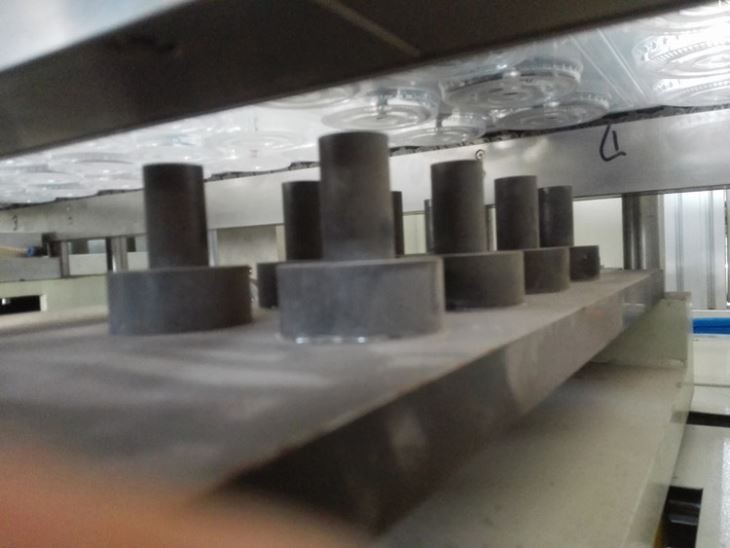
A punching mold is a device that corresponds to a punching machine and you will use it to produce punched components. The workpiece is deformed plastically with both the punching machine and the die resistance to attain. During the punching process, a punching die will play an important role. Besides, the workpiece machining accuracy determines the accuracy of the punching mold.
Advantages of Punching Mold
Geometrically perfect shapes
Only a punching mold can achieve geometrically precise shapes to the highest levels of quality – with no needle holes or spatter, no waves or scratches.
Versatile parts processing
Punching, slitting, forming, countersinking, tapping, rolling, marking and deburring: One punching mold masters all these processing steps. This saves time, as setup and programming only have to be carried out once.
Quick, quicker, punching
If you are producing a number of identical shapes in one go, punching is unbeatably fast and has no competition when it comes to price. Perforated sheets are a classic processing example: For this application, punching molds outperform all other technologies in terms of speed and cost-effectiveness.
Safe processes
Intelligent functions and numerous removal and sorting options assist as you work, making your processes fluid and safe.
Structure of Punching Mold
Mold frame
It is the main bearing part of the mold, designed to hold raw materials and create punching force to process metal parts.
Punching mold
It is a part shaped in accordance with the part to be machined, placed on the mold frame and connected to the punching machine to create punching force.
Sub-molds
They are additional parts used to hold and shape raw materials during the punching process.
Punching springs
They are springs placed between the punching mold and the mold frame to reduce the pressure on the punching mold when the punching force is applied, so that the punching mold and punching machine are protected and the service life is longer.
Damping system
It used to absorb shock and vibration when punching force is applied.
Other parts
It including protective elements, locks, precision regulators, cooling systems, cleaning systems, etc.
What Is The Installation Process Of A Punching Mold?
Installing a punching mold is a precise process and there are tips you should adhere to:
Cleanliness
To make sure the punching mold operates safely and remains durable, clean the upper and lower mold bases.
Tightening screws
Make sure you symmetrically and not sequentially tighten the fastening screws in the molds and pressure plates.
Ensure you tighten them 2 to 3 times so that each thread connection has a load.
Height of pressure plate fixing block plate. Ensure a height that is not too low or high for the pressure plate fixing block plates. Besides, you can fix the molds on the punch in two ways. One way entails clamping the top mold with mold shanks and the bottle mold connects to pressure bolt plates. The other way entails using pressure plate bolts.
Height and diameter of die handles
Ensure the diameter and the height of the die handles do not surpass the diameter and depth of the hole of die handles of press slides.
How to Maintain the Punching Mold
Ensure the best die clearance
The die clearance refers to the sum of the clearances on both sides of the punch when it enters the lower die. Different dies with different clearances should be used for different plate thicknesses and materials. Selecting the proper die clearance can ensure good punching quality, reduce burrs and subsidence, keep the sheet flat, effectively prevent strip material, and extend the life of the die.
Timely sharpening can effectively extend the service life of the mold
When the edge of the mold wears and produces an arc with a radius of about 0.10mm, sharpening is required. When sharpening, each grinding amount is 0.03 ~ 0.05mm, and the grinding is repeated until the punch is sharp. After sharpening, sharpen the cutting edge with oilstone to remove burrs, and then apply lubricating oil after demagnetization.
Regularly check the alignment of the upper and lower die seats of the turntable
If the alignment of the punch die position is not good, it will cause rapid passivation of the die, resulting in poor workpiece processing quality. The die holes and guide keys on the turntable should be inspected and lubricated, and repaired in time if there is damage; clean the lower die seat of the turntable so that the lower die can be accurately installed, and check the wear of its keys or key grooves, and replace if necessary; use a special core rod Calibrate the mold station and adjust if there is deviation.
When punching soft or viscous materials (such as aluminum); thin abrasive materials (such as glass epoxy sheet); thin hard materials (such as stainless steel); frequent stepping, you can use surface hardening (using titanium plating, Nitriding, and other methods, the surface hardened layer is a punch with a molecular structure having a thickness of 12 to 60 μm).
The forming die should be fine-tuned gradually from the lowest position to the appropriate position, otherwise, it is easy to damage the die.
Due to the pressure and heat during punching, the fine particles of the sheet will adhere to the surface of the punch, resulting in poor punching quality. The sticky material can be removed by grinding with fine oil stone, and the grinding direction should be the same as that of the punch.
If many holes are punched on one plate, every other hole should be punched first, and then the remaining holes should be punched back. This effectively relieves the stress accumulation during sequential punching in the same direction and also makes the two sets of holes in the front and back. The stresses cancel each other out, thereby reducing the deformation of the sheet.
Try to avoid punching through narrow strips
When the die is used to punch a sheet with a width smaller than the thickness of the sheet, the punch will be deformed due to the lateral force, the gap on one side will be too small or the wear will be aggravated, and the lower die will be scratched when it is severe, making the upper and lower die Also damaged.
Wenzhou Jingfei Plastic Machinery is located in Wenzhou Ruian, One of mostly famous Mechanism city. Our company is a manufacture of thermoforming machine, Our company is a technology innovation firm, Including machine designing, spare parts manufacture, installment, commission, and mold designing etc. Our company use modern professional management, carry out the concept “the best quality is the based of building reputation mostly important ”.during the processing, we hardly control the quality, reject all disqualification parts. During the marketing and after service , We give the best advise of Our clients, help clients to built a good marketing , increase the competition on Our clients. Our mainly products is PP-550 Automatic Thermoforming Machine. This machine is Our technical innovated according to the marketing request. This machine could automatically feeding the sheet,heating,forming, punching,cutting, stacking and waste reclaiming.


FAQ
We're well-known as one of the leading mold spare parts manufacturers and suppliers in China. Our factory offers high quality mold spare parts made in China with competitive price. Welcome to contact us for customized service.
We continue to promote the standardization and institutionalization of business management, comprehensively improve work standards, and establish a good image in the molding machine, blown film extrusion, cup thermoforming machine industry, which will surely create more profitable economic and social benefits.