

Amidst the current rapid industrial growth, cutting-edge production tools continue to drive progress and innovation across various industries. With the continuous advancement of science and technology, new materials and processes are constantly emerging, including the novel processing method of thermoforming. As a key industrial tool, thermoforming machines play an irreplaceable role in many industries. With the continuous advancement of technology, more and more high-tech technologies are being applied to thermoforming machines. Due to their unique technology and processes, these machines provide efficient, precise, and diversified solutions for product manufacturing. Furthermore, due to their rapid hot melt processing capabilities, they are widely used in various industries, such as automotive parts manufacturing and plastic injection molding. So, what role do thermoforming machines play? How can they be effectively used? This article will delve into the use of thermoforming machines in various industries, their basic forming principles, and their unique advantages compared to other forming equipment.
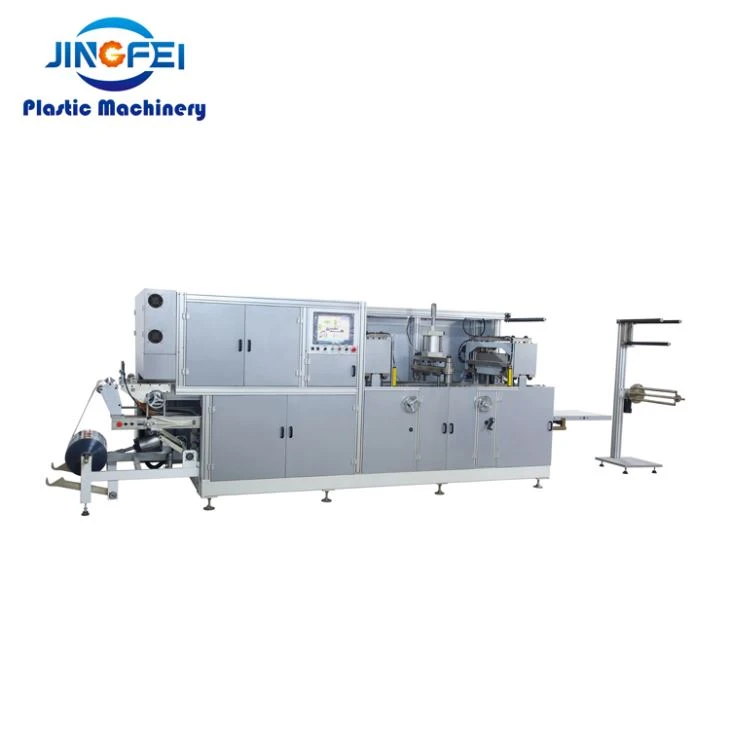
Thermoforming Machine Applications and Specific Roles in Various Industries
Packaging Industry
Thermoforming machines are widely used in the packaging industry. Furthermore, they can be used to create plastic boxes, bags, and packaging boxes with special functions. In food packaging technology, it is possible to manufacture a variety of plastic trays, primarily used for storing fruit, pastries, and various meat products. Therefore, for products with specialized requirements, thermal transfer packaging is a crucial and cost-effective method. These trays can be designed in various sizes and shapes to suit the unique properties of the food and market demand, and they also effectively protect the food from damage caused by crushing and impact during transportation and storage. For example, when packaging strawberries, specialized plastic trays ensure that each berry is securely contained within its own compartment, preventing them from being squeezed and maintaining their freshness and integrity.
Blister packaging, produced using thermoforming machines, is a common method for packaging pharmaceuticals. However, due to their small size and bulk, blister packaging is easily contaminated during use and cannot be reused, making this packaging method less common in the market. Blister packaging consists of a plastic sheet and aluminum foil. A thermoforming machine heats the plastic sheet into small blisters that can hold the medication, which are then placed inside and sealed with aluminum foil. This packaging method is easy to use, low-cost, and highly efficient, without damaging the medication itself or its appearance. This packaging design not only makes medications easily accessible to patients but also effectively protects them from adverse environmental factors such as humidity, light, and oxygen, thereby ensuring their quality and therapeutic effectiveness.
Automotive Industry
Among the many applications of thermoforming machines, automotive manufacturing occupies a key position. These parts are often large and complex in shape. In the automotive interior, thermoforming machines are used to produce components such as instrument panels and door panels. While there are many types of instrument panels on the market today, their primary function is to simply display vehicle information. For example, instrument panels require not only excellent appearance quality and adequate strength, but also must meet complex design standards. Thermoforming machines, through a precise heating and forming process, can transform plastic into instrument panels that meet these design standards. This not only enhances their appearance but also allows for the integration of various instruments and controls, enhancing the technological ambiance and comfort of the vehicle interior.
In the manufacture of automotive exterior trim, thermoforming machines can be used to produce components such as bumpers and fenders. The wide variety and complex shapes of automotive parts place high demands on molds. To ensure the safety of vehicles and passengers in the event of a collision, these parts must possess exceptional strength and toughness. Currently, thermoforming machines are widely used in the automotive industry. Thermoforming technology allows plastic materials to exhibit superior properties during the manufacturing process while effectively reducing vehicle weight. With increasingly stringent environmental requirements and the continued implementation of energy conservation and emission reduction policies in the automotive industry, plastic exterior trims have become an indispensable component of the modern automotive industry. Compared to traditional metal materials, plastic exterior trims are not only lighter in weight but also help reduce vehicle energy consumption and improve fuel efficiency. Therefore, with growing environmental awareness and increasingly stringent consumer environmental demands, more and more automakers are turning their attention to plastic exterior trims. Furthermore, through various processes such as dyeing and spraying, plastic exterior trims can be produced in a variety of colors and visual effects, significantly enhancing the overall aesthetics of a vehicle.
Electronics and Electrical Industry
Thermoforming machines also play a vital role in the electronics and electrical industry. The electronics industry continues to evolve, placing higher demands on it. Thermoforming technology is an effective tool for this purpose. When manufacturing electronic product casings, such as mobile phones and computers, thermoforming machines are capable of producing thin, lightweight, aesthetically pleasing casings while maintaining a certain level of strength. Furthermore, thermoforming machines offer a wide range of product designs. Mobile phone exteriors must offer excellent grip and protection. Thermoforming machines can process plastic materials into various curved and textured casings according to design standards, enhancing the user experience. Furthermore, the heat-formed casings create a smooth, flat surface, making them easier to process later. Furthermore, plastic casings offer excellent insulation properties, protecting the electronic components within the mobile phone from damage caused by static electricity and external electromagnetic interference.
In the manufacture of electrical components, thermoforming machines can be used to create components such as sockets and switches. They also have a wide range of applications, such as plastic substrates for electronic component packaging, automotive dashboards, and casings for various electrical components. To ensure safe electrical use, these components must possess excellent insulation properties and long-term durability. The thermoforming process involves heating and curing a plastic part using a mold to create the desired product. Through thermoforming technology, we can precisely control the size and shape of the plastic material, ensuring that all parts of the socket and switch are perfectly matched, thereby improving the overall quality and stability of the product. Furthermore, the use of advanced injection molding technology ensures low density and high strength of the product. Furthermore, the plastic sockets and switches are not only moisture- and dust-resistant, but also adaptable to a variety of different usage scenarios.
Thermoforming machines use heating and forming to change the shape of materials.
Heating Process
For plastic sheets and other materials, the heating process in thermoforming machines is a critical step in the forming process. To ensure product quality, improve productivity, and reduce production costs, suitable heating equipment is essential. Common heating methods include hot plates and infrared heating technology. Because hot plates are fragile and expensive, electric heating wires or infrared heaters are currently used to heat the material. The heating process with a hot plate involves placing the plates on either side of the material and transferring heat to the material through heat conduction, gradually raising its temperature. Due to the low thermal conductivity of the material itself, electric heating must be used. This heating method provides uniform heating and is suitable for heating most plastics. Due to the relatively soft nature of plastics, infrared heating is not suitable. The principle of infrared heating is that the energy of infrared radiation directly impacts the surface of the material, intensifying molecular vibrations within the material and rapidly raising its temperature. This technology can be used to heat products such as food and pharmaceuticals, as well as in the textile, leather, and ceramic industries. Infrared heating technology is characterized by its rapid heating speed and high efficiency. However, for temperature-sensitive materials, the heating time and intensity must be precisely controlled to prevent overheating and decomposition.
Material properties and molding results are significantly affected by the heating temperature. Generally, good plasticization can be achieved at either high or low temperatures. However, when the temperature rises above a certain level, plastic materials may decompose and release harmful gases, which not only degrades the material's physical properties, such as strength and toughness, but can also result in substandard final product quality. Conversely, if the temperature is too low, the material's fluidity is insufficient, preventing it from completely filling the mold cavity. This can lead to incomplete molding and surface defects. Furthermore, due to the inherent thermal expansion and contraction of materials, molding quality cannot be guaranteed if the heating temperature is too low. Therefore, in actual production, precise control of the heating temperature is required, tailored to the unique properties of each material and molding requirements.
Molding Processes
Common thermoforming techniques include vacuum forming and pressure forming. Vacuum forming, with its advantages of short production cycles and low costs, is widely used in the production of various plastic products. Vacuum forming is a widely used manufacturing method. The specific steps are as follows: First, the heated material is placed in a mold, typically designed as a female or male mold. When the temperature reaches a certain level, vacuum is applied. Next, a vacuum pump is used to extract the air between the mold and the material, creating a negative pressure effect inside the mold. Once the vacuum reaches a certain level, the mold's inner surface is evacuated. Under the influence of atmospheric pressure, the heated plastic material gradually conforms to the mold's shape, completing the molding process. Vacuum forming offers advantages such as low product density, light weight, low cost, and ease of automation. Vacuum forming technology is not only simple to operate but also relatively low-cost, making it particularly suitable for manufacturing a variety of plastic products, such as packaging containers and billboards.
Pressure forming is a process that shapes a material by applying pressure. Currently, the two main methods used for pressure forming in China and abroad are hot pressing and hydraulic forming. During pressure forming, the heated material is placed in the mold. A hydraulic press or other pressure equipment then applies a certain amount of pressure to the material, allowing it to fill the mold cavity and complete the molding process. Through pressure forming technology, we can manufacture products with higher dimensional accuracy and better surface quality, which is particularly suitable for application scenarios with high requirements on product quality, such as automotive interior decoration and electronic equipment casing.
The unique advantages and functions of thermoforming machines compared to other molding equipment
Cost Advantages
For small and medium-sized manufacturers, thermoforming machines offer significant cost advantages. In my country, thermoforming machines are widely used in the plastics processing industry, particularly in extrusion lines for small and medium-sized plastic products, such as thermoforming machines for plastic pellet filling and injection molding. It is important to note that the cost of thermoforming machines is relatively low. Currently, small and medium-sized enterprises in China generally have their own thermoforming machines, and most are primarily small-scale and operate on a relatively small scale. Compared to large-scale manufacturing equipment such as injection molding and die-casting machines, thermoforming machines offer a simpler structure and lower procurement costs, making it easier for small and medium-sized enterprises to introduce thermoforming machines into their production operations. Furthermore, thermoforming equipment can effectively shorten product manufacturing cycles and improve product quality. Furthermore, the thermoforming process utilizes raw materials more efficiently. When using thermoforming machines with plastic materials, the raw materials can be directly processed into finished products without the complex mold-making process. This not only simplifies the process but also improves efficiency. During the thermoforming process of plastic materials, precise heating and molding control significantly reduces the potential for waste generation. Furthermore, thermoforming machines utilize energy-efficient molds, resulting in excellent processing performance. Furthermore, some thermoforming equipment can recycle and reuse scrap, further reducing raw material costs. Furthermore, injection molding is an efficient, energy-efficient, and environmentally friendly production process, resulting in high-quality products, low costs, and high efficiency. In contrast, injection molding can produce a significant amount of waste, such as gates and runners, during the manufacturing process, leading to significant waste of raw materials.
Production Efficiency Advantages
Thermoforming machines have short molding cycles, enabling rapid production of large quantities of products to meet the massive market demand for a wide range of products. With the advancement of science and technology and growing environmental awareness, hot melt lamination technology is gaining increasing attention and is becoming widely used in the processing of various plastic products. For example, in the production of plastic packaging boxes, thermoforming machines can complete multiple processes-heating, forming, and demolding-in a very short time, enabling continuous production. Therefore, thermoforming is currently the most commonly used and efficient processing method in the plastics industry. In certain large-scale production lines, the high-efficiency of thermoforming machines can significantly enhance overall production efficiency. Furthermore, their use can reduce labor intensity and production costs, bringing significant benefits to businesses. For example, in the food packaging production process, thermoforming machines can work in conjunction with other equipment such as filling and sealing machines to achieve automated production, significantly reducing product manufacturing time and improving production efficiency.
Design Flexibility
Thermoforming machines demonstrate exceptional design adaptability. Furthermore, their automated control technology simplifies operation and increases productivity. These machines can produce a variety of complex product forms, and mold replacement is relatively simple. Consequently, thermoforming machines have become a preferred choice for many companies in product development. In today's era of constant product upgrades, companies need to continuously adjust and optimize product designs and production processes based on market demand. Furthermore, they can be mass-produced to achieve cost savings. Thermoforming machines are able to rapidly adapt to diverse product production needs, enabling the creation of products with varying shapes, sizes, and functions simply by replacing the corresponding mold. At the same time, during the design process of automobile bodies, companies can also use thermoforming machines to shorten the R&D cycle and reduce production costs. For example, during the design process of electronic product shells, in order to better meet consumers' personalized needs for product appearance, companies may continue to launch innovative shell design solutions. At the same time, thermoforming machines can also effectively improve the company's production capacity and shorten the product design cycle. Thermoforming machines have the ability to easily complete these design adjustments, thereby creating broader innovation opportunities for companies. In addition, thermoforming
Conclusion
In general, thermoforming machines play a key role in a variety of industries, including packaging, automotive, and electronics. With the continuous advancement of science and technology, thermoforming machines are becoming increasingly advanced. Through sophisticated heating and forming techniques, these machines can process a variety of materials, including plastics, into a variety of product forms to meet the specific needs of various industries. As science and technology advance, more and more advanced technologies are being incorporated into thermoforming machines, leading to higher levels of automation, easier operation, higher performance, and more diverse functions. Compared to other forming equipment, thermoforming machines offer significant advantages in cost, production efficiency, and design flexibility, providing a solid foundation for companies' production activities and sustainable development.
Looking forward, as technology continues to advance, thermoforming machines are expected to develop towards a more intelligent and environmentally friendly path. The application of digital technology in thermoforming machines will improve product performance and quality, reduce energy consumption and costs, and enable intelligent control. Intelligent thermoforming machines will be equipped with multiple functions, such as automatic control, fault diagnosis, and remote monitoring, further enhancing production efficiency and product quality. Green thermoforming machines will focus on energy conservation and emission reduction and the use of environmentally friendly materials to mitigate negative environmental impacts. Thermoforming machines will become a new trend product. I firmly believe that in the future industrial development, thermoforming machines will continue to play a key role and promote the stable growth of various industries.


