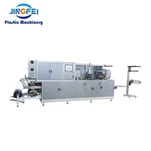
PP (polypropylene) is one of the most widely used materials in thermoforming processes. The design and replacement process of its molds directly impacts product quality, production efficiency, and equipment lifespan. Based on practical experience in automotive parts manufacturing and home appliance casing production, this article systematically outlines the design specifications and standardized replacement processes for PP thermoforming molds, providing the industry with a practical technical guide.
Core Requirements requirements for PP Material Properties in Mold Design
1.Flowability Control and Gating System Design
Polypropylene melt flow index high, easy to flash and overflow in thin-walled areas. Mold design must adhere the following principles:
Gate Location Optimization: Avoid direct gates and give priority to point gates or submarine gates to reduce orientation stress caused by melt impact. For example, car dashboard molds use multi-point underwater gates to prevent weld lines from reaching key functional areas, increasing product yield to 98%.
Runner Size Matching: Main runner diameter should be controlled between 4 and7mm, and cold stopper depth should be 1.5 times the diameter of the flow to ensure uniform filling of the melt. The filling time can be reduced by 22% by optimizing the runner layout.
2.Temperature control system design
Mold temperature is the key parameter to control PP crystallinity:
Zoned Temperature Control Design: Core temperature should be 5-10°C below cavity temperature to prevent product warping. A medical consumable mold adopts an independent temperature control circuit to ensure that the product flatness error is controlled within ±0.05 mmWave.
Cooling water channel layout: Water channel diameter ≥8mm, maintained at 1.5 times the diameter of the surface channel of the cavity to ensure cooling efficiency. A packaging container mold that simulation optimization of waterways to reduce cooling time from 18 seconds to 12 seconds.
3. Exhaust System Design
PP melt has low viscosity and requires adequate exhaust structures:
Exhaust groove dimensions: 0.02-0.05mm deep, 3-5mm wide, evenly distributed along the parting surface. The interior molds reduce the burn rate from 3 percent to 0.2 percent by increasing the exhaust grooves.
Vacuum-assisted exhaust: For deep cavity structures, the cavity gases can be quickly expelled by vacuum pump extraction system. The surface gas mark is reduced by 90% after the application of this technique in large tank die.
Standardized Mold Replacement Process (with hydraulic die locking system as an example)
Stage 1: Preparation for mould replacement (about 30 minutes)
Equipment Status Confirmation:
Switch to "Repair Mode" and hang the "Equipment under Maintenance" warning sign.
Reset the hydraulic system pressure to zero and close the compressed air three-way inlet valve.
The mold temperature is measured using an infrared thermometer, and if the temperature exceeds 80°C, activate the water cooling system to force cooling.
Tools and Consumable Preparation:
Special lifting tools: Check lifting ring screw depth ≥ 1.5 times diameter, wire rope rated load ≥ 1.5 times mold weight.
Positioning ring: Tolerance ±0.02mm, installed by three-point contact.
Consumables: Thermal grease over 300°C, rust resistant oil to GB/T 11143 standard.
Mold Technical Parameter Verification:
Make sure the mold thickness matches the equipment's mold adjustment range.
Check the integrity of the cooling water connector and hot-line junction box.
Check the sealing of the tubing seams of the core extractor.
Stage 2: Old Mould Removal (approx.) 45 minutes)
Safety measures:
Operators wear insulated gloves and safety helmets and use red safety locks to ensure the mold platform is secure.
Place an oil collecting tray under the mold to prevent residual hydraulic oil contamination of the equipment.
Standardized Disassembly Procedure:
Hydraulic System Separation: First, shut off air supply, then slowly rotate the hydraulic connector to the second position and watch the pressure gauge stabilize at less than 0.5MPa.
Removal of die retaining screw: Loosen screw diagonally with torque wrench 50-300N·m) to control torque value to 80% of standard value.
Lifting operation: Double wire rope four-point lifting method is used to maintain the mold's levelness ≤0.05mm/m.
Stage 3: New Mold Installation (approx.) 60 minutes)
Precise Positioning Installation: use positioning ring to guide die into equipment baseline with a centerline deviation ≤ 0.1 mm/100mm.
Installation of Pressure Plates: Hydraulic pressure plates require two additional fixed pressure plate. Screw insertion depth ≥ 1.5 times diameter
Horizontal calibration: Calibration using a leveller (accuracy 0.02mm/m) with error control within 0.05mm
System connection and debugging:
Cooling system: Water is provided before power is supplied to prevent the heat pipe seal from ageing
Core tensioning mechanism: after connection to the oil pipe, operational tests are conducted to ensure leak-free and synchronous accuracy ≤ 0.02mm
Mold temperature control: The die temperature of crystalline PP material is controlled at 80-120°C by step heating method (increase by 20°C every 30 minutes).
Stage 4: First piece inspection and data recording (approximately 30 minutes)
Key dimension inspection:
- Parting line flash thickness ≤ 0.02mm
- Ejection mark indentation ≤ 0.05mm
- Dimensional stability CPK ≥ 1.33
Process data recording:
Fill the "Mold Change Record Form, including operators, working hours, anomalies, etc..
File mold temperature curve and pressure change data and establish equipment health record.
INTRODUCTION Elements of Safe Operating Procedures
High voltage system protection:
• Make sure the pressure is zero before operating the hydraulic system.
* Use special plugs to prevent oil splashing when replacing hydraulic components.
Heat Protection Measures:
* Wear heat-resistant gloves when mold temperature exceed 60° C.
* Use long-handled tools and maintain a safe distance when cleaning heat channels.
Mechanical protection requirements:
* Install cover on moving parts of the die.
* Do not put your hand in the mold closing area during debugging.
Through systematic mold design and standardized replacement process, the company can realize efficient and stable operation of PP thermoforming production. Data show that standardized operations can reduce product defect rates by 67% and improve overall equipment efficiency by 35%. It is recommended that skills assessments of operators be conducted on a quarterly basis and that operating standards be continuously optimized to meet the changing needs of new materials and processes.