

Vacuum forming machines are indispensable across a wide range of modern manufacturing industries. Vacuum forming utilizes the principle of vacuum to rapidly cool and solidify plastic sheets into a single shape. This technology is widely used in industries such as packaging, automotive, electronics, and toys. It effectively transforms materials such as plastic sheets into a variety of products, including food packaging, automotive interiors, and electronic device casings. Currently, vacuum suction cups have become one of the most commonly used forming machines. Due to their unique manufacturing method, they offer advantages such as low cost, high production efficiency, and a wide range of shapes, earning them high favor among manufacturers.
For many readers, the operating mechanism of a vacuum forming machine may seem mysterious. While it's essentially a simple and practical processing tool, it's a crucial and potentially powerful piece of technological equipment. Many may be curious about how it transforms an ordinary piece of plastic into a sophisticated finished product. In fact, with proper operation, vacuum forming machines offer unmatched advantages in producing exquisite products. This article will delve into the operating process of a vacuum forming machine, providing detailed answers to three core questions: material heating, vacuum suction, and demolding. This will help you unlock the mysteries behind vacuum forming machines.
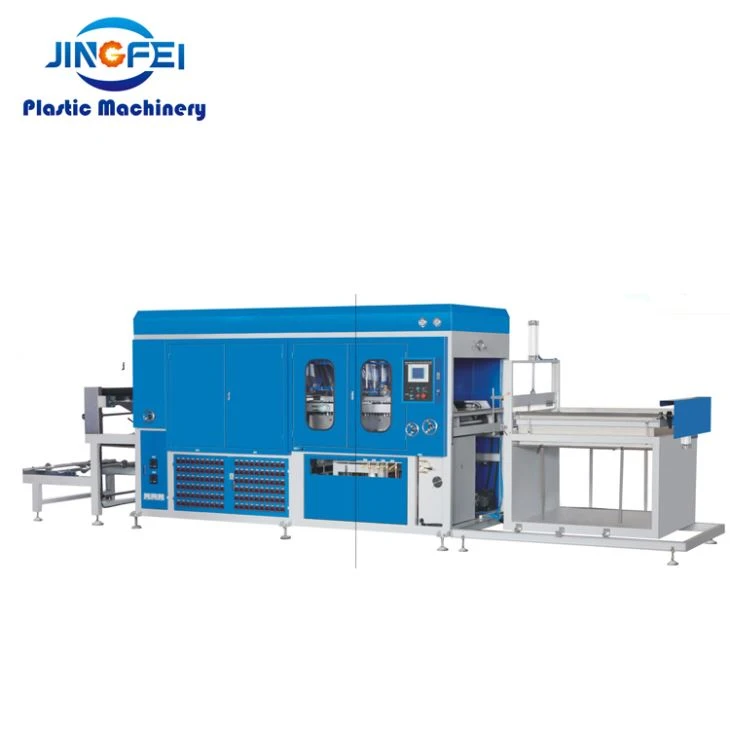
Overview of the Vacuum Forming Machine's Overall Workflow
The operating process of a vacuum forming machine is a continuous and organized process. To ensure product quality, a series of technical measures are required to complete the entire process. First, the material to be processed, typically a plastic sheet, is placed in a heated area. A heating device heats the material to ensure it reaches the appropriate softness. Then, the vacuum system is activated, creating negative pressure inside the mold. This forces the heated material to adhere tightly to the mold surface, forming a product that matches the mold's shape. Finally, demolding is performed to remove the formed product from the mold, completing the molding process.
How Vacuum Forming Machines Operate During the Material Heating Stage
Introduction to Heating Equipment
Infrared heaters and ceramic heating plates are commonly used heating tools in vacuum forming machines. Because infrared radiation forms heat and is absorbed by the object, it cannot effectively heat heat-sensitive materials such as metals and plastics. Infrared heaters heat materials through the thermal effect of infrared radiation, offering rapid heating, high thermal efficiency, and uniform heating. Infrared radiation penetrates directly into the material surface, heating both the interior and exterior of the material simultaneously, effectively reducing heating time. Infrared heating plates can also be used at high temperatures, but their disadvantage is that they are prone to burnout. Ceramic heating plates operate by utilizing resistance heating, converting electrical energy into heat to heat the material. Because the basic principles of infrared heating and ceramic heating plates are similar, ceramic materials can be used as heating plates in practical applications. Ceramics offer excellent insulation and high-temperature resistance, ensuring stable operation of the heating plates. Ceramic heating plates can be manufactured using various sintering processes to meet specific application requirements. The surface temperature of the ceramic heating plate is uniformly distributed, creating consistent heating conditions for various materials.
Material Placement and Heating Zone Setting
Ensuring that the material being processed is precisely placed within the heating zone is crucial for ensuring heating efficiency. To prevent deformation or damage to the workpiece due to excessive temperatures, an appropriate heating method should be selected. During material placement, the surface must be smooth, avoiding wrinkles or tilting, to ensure uniform heating. Different products require a heating temperature that suits their specific needs; otherwise, production requirements will not be met. Furthermore, the appropriate heating zone must be determined based on the size and shape of the material. Lasers can be used as a heat source for rapid and precise material heating. An excessively large heating zone can lead to excessive energy consumption; conversely, a too small heating zone can easily cause material deformation. An overly narrow heating zone may result in insufficient heating of the material. In practice, the size of the heating zone can be adjusted by modifying the material's surface roughness. You can refer to the vacuum forming machine manufacturer's operating instructions, such as the [Operation Manual of a Well-Known Vacuum Forming Machine], which provide detailed guidelines for material placement and heating zone setting. In actual production, various reasons, such as improper mold structure and excessively high or low temperatures, can lead to defects in products or even scrap. To ensure a smooth heating process, operators must strictly follow the instructions in the manual.
Heating Temperature and Time Control
Different materials require different suitable heating temperature ranges and durations. Therefore, ensuring product quality requires careful control of the heating time. For example, for commonly used plastic sheets, polyethylene (PE) sheets typically require heating within a temperature range of 120-180°C, with the heating duration determined by the sheet thickness, generally ranging from 10-60 seconds. Polypropylene (PP) sheets have an optimum heating temperature range of 160-220°C, and the entire heating process takes approximately 10-60 seconds. If high-temperature treatment of the material is required, the appropriate heating temperature and time must be selected. If the heating time is too short, the material will not be sufficiently flexible, making successful molding impossible. If the heating time is too long, the material will melt internally, causing local overheating and resulting in cracking and wrinkling in the product. If the heating process lasts too long, the material may become too soft, potentially causing deformation or reduced surface quality after forming.
Vacuum forming machines utilize temperature sensors and a feedback control mechanism within the heating system to precisely control the heating temperature and duration. The heating system consists of a heater and a temperature control circuit, forming a closed loop. The temperature sensor tracks temperature changes within the heating zone in real time and feeds this information back to the control system. The heating system calculates the optimal heating temperature based on the temperature signal collected by the temperature sensor and transmits this information to the control system. The control system automatically adjusts the heating power based on the difference between the preset and actual temperature values to achieve precise control of the heating temperature. If the heating temperature control range falls below the set value, the control system issues an alarm, prompting the operator to take corrective action. Furthermore, the control system automatically terminates heating after a predetermined heating time has elapsed. This system effectively improves temperature control and product quality during vacuum heat treatment processes, reduces energy consumption, and offers significant economic and social benefits.
How does a vacuum forming machine use vacuum to adsorb the material onto the mold?
Vacuum System Components
The vacuum system of a vacuum forming machine primarily consists of key components such as a vacuum pump, vacuum tank, and vacuum valve. The vacuum pump plays a crucial role in the entire vacuum system. As a key component in the vacuum system, its primary function is to extract air from the mold, thereby creating a negative pressure effect. Therefore, selecting the right vacuum pump is crucial to improving the production efficiency of a vacuum forming machine. Common vacuum pump types include rotary vane vacuum pumps and water ring vacuum pumps. Rotary vane vacuum pumps are characterized by their fast pumping speed and high vacuum level, while water ring vacuum pumps are known for their simple structure and stable performance. Vacuum pumps typically use both vacuum tanks and vacuum valves to achieve vacuum extraction. The vacuum tank's primary function is to maintain the vacuum. When the vacuum pump releases air, it is stored in the vacuum tank, ensuring stable operation of the vacuum system. A vacuum pump consists of a vacuum pump, a vacuum pump valve, and connecting piping. The vacuum pump valve is one of the most important and complex components in a vacuum system. Its function is to enable rapid startup and shutdown of the vacuum pump and maintain a certain pressure. The vacuum valve's primary function is to control the vacuum system's on/off state and the vacuum level. By adjusting the valve's opening, the vacuum level inside the mold can be precisely controlled.
Mold Design and Vacuum Channels
Mold design plays a crucial role in vacuum adsorption performance, particularly in the layout and design principles of the vacuum channels. This article theoretically analyzes the relationship between the structural parameters of the vacuum channels and product performance. To ensure uniform vacuum distribution across the material surface, the vacuum channels should be evenly arranged across the mold surface. Improper channel layout can lead to uneven vacuum distribution and even cause localized deformation or damage to the product. When constructing the vacuum channels, multiple variables, such as channel diameter, spacing, and orientation, must be carefully considered. Improper channel layout can prevent gas from entering the mold, resulting in poor adsorption or leakage. If the channel diameter is too large, vacuum leakage may occur, reducing adsorption capacity. If the channel diameter is too small, insufficient local heating may occur, leading to workpiece deformation or cracking. If the channel diameter is too small, air flow resistance increases, thus affecting adsorption speed. Therefore, selecting the appropriate vacuum channel size is crucial. When determining the channel spacing, the material properties and molding requirements should be considered. Typically, the spacing should be within the range of 10-50 mm. To minimize air flow loss, the channel size can be appropriately increased to suit the product structure. To reduce air flow resistance, the channel direction should avoid sudden turns. This article focuses on in-depth research on vacuum channel molds and proposes corresponding optimization solutions, hoping to effectively improve product performance and enhance enterprise economic benefits.
Detailed Explanation of the Vacuum Adsorption Process
When the heated material reaches the appropriate state, the vacuum system is activated. A vacuum pump is used to extract air from the mold and maintain a certain pressure. Once the vacuum pump is activated, it draws air from the mold, creating a negative pressure inside the mold. As the vacuum level continues to increase, the pressure inside the mold increases until the mold is flattened. Under the influence of negative pressure, the external atmospheric pressure presses the heated material tightly against the mold surface, achieving the desired molding process.
During vacuum adsorption, various problems may arise, such as uneven adsorption and gas leakage. Gas leakage may be caused by prolonged adsorption equilibrium time. Uneven adsorption may also be due to improper vacuum channel layout design or uneven material heating. Gas leakage may be caused by insufficient vacuum or other reasons. To address this, we need to optimize the vacuum channel design to ensure uniform distribution and control the vacuum pump pressure and flow rate to prevent gas leakage. Furthermore, we adjust the heating parameters to ensure uniform heating of the material. Excessive gas pressure or temperature in the vacuum chamber can cause significant gas leakage. Mold sealing problems or damage to the vacuum system may be the cause of gas leakage. Therefore, during production, it is essential to maintain the mold and vacuum pump to prevent gas leakage. If there is a problem with the mold seal, carefully check the sealing strips to ensure they are in good condition and replace them promptly if damaged. If not, the problem can be addressed through the exhaust channel. When some parts of the vacuum system are damaged, we should consider replacing those damaged parts. When the vacuum system fails due to poor mold sealing or abnormal operation of the vacuum pump, it is necessary to promptly troubleshoot the problem and adjust and maintain the relevant equipment. Based on actual production cases, we refer to the practical experience of vacuum forming machine maintenance personnel to summarize.
How is the demolding operation performed after the vacuum forming machine completes molding?
Classification of Demolding Methods
In modern manufacturing, the choice of demolding method has a significant impact on product quality and production efficiency. Common demolding methods include mechanical, pneumatic, and hydraulic demolding. Mechanical demolding is suitable for products with simple shapes and low demolding resistance, offering the advantages of ease of operation and low cost. However, demolding may be difficult for products with complex shapes. Pneumatic demolding uses air pressure to demold products, making it suitable for products with complex shapes or high demolding resistance. It can effectively reduce damage, but it also requires high equipment investment and maintenance costs. Hydraulic demolding utilizes a hydraulic system to provide a strong demolding force, suitable for products of various shapes and demolding resistances, and offers excellent demolding results. However, the equipment is bulky and places high demands on the hydraulic system. In general, choosing the appropriate demolding method should be based on a comprehensive consideration of the specific product shape, demolding resistance, and production costs to achieve optimal production results and economic benefits.
Working Principle of the Demolding Mechanism
The mechanical demolding mechanism is a crucial component in mold design. Its operation primarily relies on the coordinated operation of components such as the ejector pin, ejector pin retaining plate, and demolding plate. During the demolding process, the ejector pin, driven by a hydraulic or pneumatic system, pushes the demolding plate upward, smoothly ejecting the molded part from the mold. Triggering the demolding signal is crucial to ensuring a smooth demolding operation. Operators must constantly monitor changes in demolding force to avoid damage to the molded part due to excessive friction or suction. Furthermore, during mechanical demolding, precautions include regularly inspecting the ejector pin for wear and its fit with the ejector pin retaining plate to ensure stable and safe demolding. Proper design and maintenance can effectively improve the efficiency and accuracy of mechanical demolding, providing reliable assurance for the production process.
Precautions for Demolding Operation
During the demolding process of a vacuum forming machine, controlling the demolding force and speed is crucial to ensure the integrity and quality of the molded part. Excessive demolding force may damage the molded part, while excessive demolding speed may cause deformation. Therefore, when performing demolding, operators should rationally adjust demolding parameters based on the material and structural characteristics of the molded part. Furthermore, regular inspection of demolding mechanism components is crucial for ensuring smooth demolding. Wear or damage to components can directly affect demolding effectiveness and may even cause equipment failure. Therefore, operators should refer to training materials, master relevant maintenance and inspection knowledge, and regularly maintain the demolding mechanism to ensure it is in good working condition. Through scientific management and operation, demolding efficiency can be effectively improved, the damage rate of molded parts can be reduced, and production quality and efficiency can be enhanced.
Conclusion
In the three core steps of material heating, vacuum suction, and demolding, vacuum forming machines exhibit unique operating methods and key points. Material heating is the most critical and challenging step in the entire process, making analysis and research on this process crucial. During material heating, selecting appropriate heating equipment, ensuring accurate material placement, and precisely managing the heating temperature and duration are crucial. During vacuum suction, the mold and vacuum channel must be carefully designed to ensure uniform vacuum application across the material surface. During demolding, consideration must also be given to preventing workpiece deformation or cracking. During demolding, the most appropriate demolding method must be selected based on the unique properties of the product, ensuring proper control of the force and speed. Each step in the entire process is crucial. These three stages are closely interconnected and interact with each other, and problems at any stage can negatively impact the quality of the final product.
Looking forward, vacuum forming machines are expected to develop towards a more intelligent and efficient path. Intelligent technology is key to achieving these goals, and intelligent control is the most important means of realizing these functions. Intelligent control technology automatically monitors and adjusts every step of the process, including heating, vacuuming, and demolding, thereby improving production efficiency and ensuring consistent product quality. Automated control significantly improves processing precision and reduces errors caused by human error. Efficient heating tools and vacuum technology will further reduce molding time and energy consumption. This article focuses on the current status and development trends of vacuum forming machines both domestically and internationally. We urge readers to delve deeper into and study vacuum forming technology, and to contribute to its further development and practical application.


