

A high - speed punching mold is a crucial tool in the manufacturing industry, especially for mass - production processes. As a Punching Mold supplier, I have in - depth knowledge of the characteristics that make a high - speed punching mold stand out. In this blog, I will share these key characteristics to help you better understand what to look for when choosing a high - speed punching mold.
1. High Precision
Precision is the cornerstone of a high - speed punching mold. In high - speed punching operations, even the slightest deviation can lead to defective products, increased scrap rates, and reduced production efficiency. A high - precision punching mold is designed to ensure accurate punching, cutting, and forming of workpieces.
The mold's dimensional accuracy is typically within a few micrometers. This level of precision is achieved through advanced machining techniques such as CNC (Computer Numerical Control) machining. CNC machines can precisely control the movement of cutting tools, ensuring that the mold cavities and punches are machined to the exact specifications. For example, in the production of electronic components, high - precision punching molds are used to create tiny holes and intricate shapes with extremely tight tolerances.
Moreover, high - precision molds also have excellent repeatability. Once the mold is set up, it can produce a large number of identical parts with consistent quality. This is essential for industries that require high - volume production, such as the automotive and consumer electronics industries.
2. High Strength and Wear Resistance
High - speed punching involves applying a large amount of force in a short period. Therefore, a high - speed punching mold must have high strength to withstand the impact and pressure during the punching process. The mold is typically made from high - strength alloy steels, such as D2, SKD11, or Cr12MoV. These materials have excellent mechanical properties, including high hardness, toughness, and fatigue resistance.
In addition to high strength, wear resistance is also a critical characteristic. During the punching process, the punches and dies come into contact with the workpiece, causing friction and wear. A wear - resistant mold can maintain its shape and dimensional accuracy for a longer time, reducing the frequency of mold replacement and maintenance costs. Surface treatment techniques, such as nitriding, coating, or plating, are often used to enhance the wear resistance of the mold. For instance, a titanium nitride (TiN) coating can significantly improve the hardness and lubricity of the mold surface, reducing friction and wear.
3. Good Heat Resistance
High - speed punching generates a significant amount of heat due to the friction between the mold and the workpiece. If the mold cannot dissipate heat effectively, it can lead to thermal expansion, which may affect the dimensional accuracy of the mold and reduce its service life. Therefore, a high - speed punching mold must have good heat resistance.
Some high - speed punching molds are made from heat - resistant materials, such as hot - work tool steels. These steels can maintain their strength and hardness at high temperatures. Additionally, proper cooling systems can be incorporated into the mold design to dissipate heat. For example, water - cooling channels can be drilled inside the mold to circulate coolant, effectively reducing the temperature of the mold during operation.

4. High Rigidity
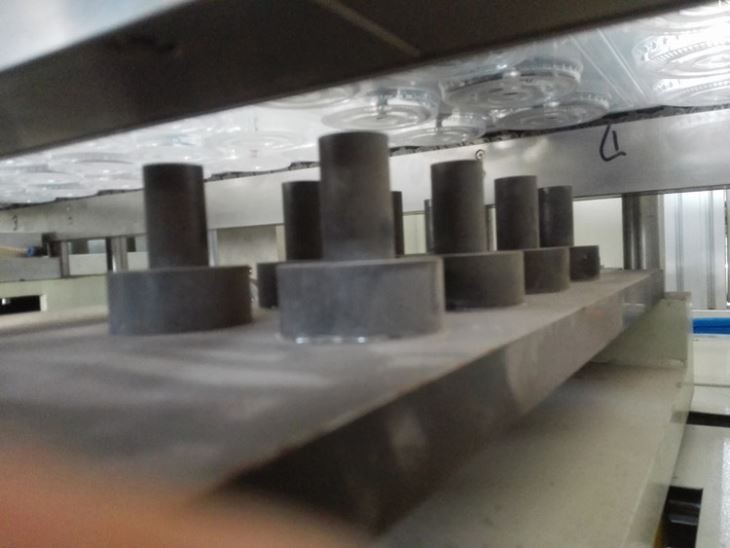
Rigidity is essential for a high - speed punching mold to ensure stable and accurate punching. A rigid mold can prevent deformation and vibration during the punching process, which is crucial for maintaining the quality of the punched parts. The mold structure is designed to be as rigid as possible, with thick walls and appropriate reinforcement.
For example, in a multi - station progressive punching mold, the base plate and the die set are usually made thick and heavy to provide sufficient rigidity. Additionally, the punches and dies are firmly fixed to the mold to prevent any movement or displacement during punching.
5. Easy Maintenance
In a high - speed production environment, minimizing downtime for mold maintenance is crucial. A high - speed punching mold should be designed for easy maintenance. This includes features such as easy access to the punches and dies for replacement, simple disassembly and assembly procedures, and clear markings for part identification.
For example, some molds are designed with quick - change punch and die systems, which allow for rapid replacement of worn - out parts without the need for complex disassembly. Moreover, the mold should be easy to clean and lubricate to ensure smooth operation.
6. Compatibility with High - Speed Presses
A high - speed punching mold must be compatible with high - speed presses. The mold design should take into account the specifications of the press, such as the stroke length, tonnage, and punching speed. The mold should be able to operate smoothly at the high - speed settings of the press without causing any damage to the mold or the press.
For example, the mold's guiding system should be designed to match the movement accuracy of the press. The punch and die clearance should also be adjusted according to the punching speed and the type of workpiece material. If you want to learn more about different types of molds, you can visit our website: Punching Mold, Cutting Mold, and Forming Mold for Thermoforming Machine.
7. Advanced Design and Manufacturing Technology
The design and manufacturing technology of a high - speed punching mold play a crucial role in determining its performance. Advanced CAD/CAM (Computer - Aided Design/Computer - Aided Manufacturing) technology is used to design the mold with high precision and efficiency. The 3D modeling software allows designers to visualize the mold structure and simulate the punching process, optimizing the mold design before manufacturing.
In terms of manufacturing, modern machining techniques, such as wire - cutting EDM (Electrical Discharge Machining) and laser cutting, are used to produce high - quality mold components. These techniques can achieve high precision and complex shapes, which are difficult to obtain with traditional machining methods.
Conclusion
A high - speed punching mold with the characteristics of high precision, high strength and wear resistance, good heat resistance, high rigidity, easy maintenance, compatibility with high - speed presses, and advanced design and manufacturing technology is essential for efficient and high - quality production. As a Punching Mold supplier, we are committed to providing our customers with high - quality punching molds that meet these requirements.
If you are interested in purchasing high - speed punching molds or have any questions about our products, please feel free to contact us for procurement and negotiation. We look forward to serving you and helping you improve your production efficiency and product quality.
References
- "Tool and Die Making Technology" by George H. Brown
- "Metal Forming: Mechanics and Metallurgy" by Dieter, G. E.
- "Manufacturing Engineering and Technology" by Serope Kalpakjian and Steven R. Schmid


