Hey there! As a supplier of Vacuum Forming Machines, I often get asked about how to calculate the production cost when using these machines. It's a crucial aspect for businesses looking to optimize their operations and maximize profits. In this blog, I'll break down the key factors involved in calculating the production cost of using a Vacuum Forming Machine.
1. Machine Purchase and Depreciation
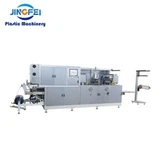
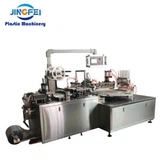
First off, let's talk about the initial investment in the Vacuum Forming Machine. There are different types of machines available, like the Vacuum Thermoforming Machine, Thermoforming Vacuum Packaging Machine, and Automatic Vacuum Forming Machine. Each type comes with its own price tag, depending on features, size, and brand.
When calculating the production cost, you need to factor in the machine's depreciation over its useful life. For example, if you buy a machine for $50,000 and it has a useful life of 10 years, you can divide the cost by the number of years to get an annual depreciation cost. So, $50,000 divided by 10 years gives you $5,000 per year. If you produce, say, 10,000 units per year, the depreciation cost per unit would be $5,000 divided by 10,000, which is $0.5 per unit.
2. Raw Materials
The raw materials used in vacuum forming are a significant part of the production cost. Common materials include plastic sheets like ABS, PVC, and PETG. The cost of these materials can vary depending on the quality, thickness, and quantity you buy.
Let's say you're using a particular plastic sheet that costs $2 per square foot. If each product you make requires 2 square feet of the sheet, the raw material cost per unit would be $2 x 2 = $4. It's important to source your raw materials from reliable suppliers to ensure consistent quality and cost - effectiveness.
3. Labor Costs
Labor is another major component of the production cost. The amount of labor required depends on the level of automation of your Vacuum Forming Machine. If you have a fully automatic machine, the labor required may be minimal, mainly for machine monitoring and product handling. On the other hand, a semi - automatic or manual machine may need more operators.


Let's assume you pay your operators $20 per hour. If it takes an operator 0.5 hours to produce one unit on a semi - automatic machine, the labor cost per unit would be $20 x 0.5 = $10. You also need to consider other labor - related costs like benefits and training.
4. Energy Consumption
Vacuum Forming Machines consume energy to heat the plastic sheets and operate the vacuum pumps. The energy cost can vary depending on the machine's power rating and the local electricity rate.
For example, if your machine has a power rating of 10 kilowatts and you run it for 8 hours a day at an electricity rate of $0.15 per kilowatt - hour. The daily energy cost would be 10 kilowatts x 8 hours x $0.15 = $12. If you produce 100 units per day, the energy cost per unit would be $12 divided by 100, which is $0.12.
5. Tooling Costs
Tooling is essential for vacuum forming as it determines the shape of the final product. The cost of tooling can be significant, especially for complex shapes. Tooling can be made from different materials like wood, aluminum, or steel, and the cost varies accordingly.
Let's say you spend $10,000 on a custom - made aluminum tool. If you expect to produce 10,000 units using that tool, the tooling cost per unit would be $10,000 divided by 10,000, which is $1 per unit.
6. Maintenance and Repairs
Regular maintenance is necessary to keep your Vacuum Forming Machine in good working condition. This includes cleaning, lubricating, and replacing worn - out parts. The cost of maintenance can vary depending on the machine's complexity and usage.
On average, you might spend around 5% - 10% of the machine's purchase price on maintenance and repairs each year. So, if your machine costs $50,000, you could spend between $2,500 and $5,000 per year. If you produce 10,000 units per year, the maintenance cost per unit would range from $0.25 to $0.5 per unit.
7. Overhead Costs
Overhead costs include things like rent for the production facility, insurance, and administrative expenses. These costs are not directly related to the production of each unit but still need to be factored in.
Let's say your monthly rent, insurance, and administrative expenses total $5,000. If you produce 10,000 units per month, the overhead cost per unit would be $5,000 divided by 10,000, which is $0.5 per unit.
Putting It All Together
To calculate the total production cost per unit, you simply add up all the costs we've discussed:
Total Production Cost per Unit = Depreciation Cost per Unit+Raw Material Cost per Unit+Labor Cost per Unit+Energy Cost per Unit+Tooling Cost per Unit+Maintenance Cost per Unit+Overhead Cost per Unit
For example, using the values we calculated above:
Depreciation Cost per Unit = $0.5
Raw Material Cost per Unit = $4
Labor Cost per Unit = $10
Energy Cost per Unit = $0.12
Tooling Cost per Unit = $1
Maintenance Cost per Unit (taking the mid - range of $0.375)
Overhead Cost per Unit = $0.5
Total Production Cost per Unit = $0.5 + $4+ $10+ $0.12+ $1+ $0.375+ $0.5 = $16.495
By accurately calculating the production cost, you can set a competitive price for your products and ensure that your business remains profitable.
Contact Us for More Information
If you're in the market for a Vacuum Forming Machine or want to learn more about optimizing your production costs, we're here to help. Our team of experts can provide you with detailed information about our machines and how they can fit into your production process. Whether you need a Vacuum Thermoforming Machine, Thermoforming Vacuum Packaging Machine, or Automatic Vacuum Forming Machine, we've got you covered. Don't hesitate to reach out to us to start a discussion about your specific needs.
References
- "Introduction to Vacuum Forming", Plastics Manufacturing Handbook
- "Cost Accounting for Manufacturing Businesses", Accounting Today