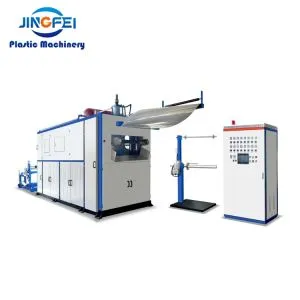
Plastic injection molding machines is a common equipment for plastic processing. They are made by heating, plasticizing and injecting plastic materials-melting them and forcing them into mold cavity-and then cooling and curing them to form the desired plastics. It has the characteristics of high production efficiency, stable size and high automation. It is widely used in automobile, electronics, home appliances, medical devices, packaging, consumer goods and so on.

1.Basic working principle of plastic injection molding machines
The operation of plastic injection molding machine typically involves material feeding, heating and plasticizing, injection, maintaining pressure, cooling and disassembly.
First, plastic particles enter the heating cylinder through the hopper and gradually melt under the combined action of screw rotation and heating to form a plastic melt with good flow characteristics. The screws then move forward to inject molten plastic into the mold cavity at a specific pressure and speed.
Inside the mould, the plastic cools and gradually takes a stable shape of the product, before a ejection mechanism is released to the finished part. By adjusting parameters such as injection pressure, injection speed, temperature and cooling time, manufacturers can produce plastic products of all sizes and structural designs.
2.What are the main components of a plastic injection molding machine?
A complete plastic injection molding machine typically consists of an injection system, a clamping system, heating system, hydraulic or servo drive system, control system and cooling system.
Among them, injection system is mainly responsible for plastic molding and injection molding, the clamping system is responsible for mold opening and closing, providing sufficient clamping force during production, control system is used for setting and monitoring parameters such as temperature, pressure, speed, production cycle, etc.
Different types of plastic injection molding machines are different in structure, clamping force, injection capacity, automation level, etc., so selection of equipment should be based on specific production requirements.
3. What products are mainly manufactured from plastic molding machines?
Plastic injection molding machines are widely used to produce plastic products of all shapes and sizes as long as the right mold is designed.
In the automotive industry, these machines are used to manufacture interior components, bumper parts, dashboard components, light casings and various plastic connectors.
In the home appliance industry, common products include appliance housings, knobs, switches, fan blades and plastic parts for internal structures. In the electronics industry, injection molding equipment is used to manufacture connectors, terminal housing, electronic device housing, and precision plastic components.
In the medical industry, plastic injection molding machines are used to produce medical device casings, plastic components and single-use medical supplies. Medical products are subject to specific materials and production standards based on their intended use.
In addition, plastic injection molding machines are widely used in the manufacture of plastic bottle caps, food packaging, storage boxes, plastic containers, toys, household goods and other products.
4. What are the advantages of plastic injection molding machines?
Compared with some traditional plastic processing methods, plastic injection molding machines is suitable for large-scale, continuous production.
First of all, injection molding cycle is short, can quickly produce a large quantity of products. Second, individual molds can duplicate products of the same specifications, ensuring consistency in product dimensions and appearance.
In addition, modern plastic injection molding machines can be combined with robotic arms, automatic feeding and separation systems, visual inspection units and other equipment to improve production line automation and reduce manual labor.
5. How to choose the right plastic injector
When choosing a plastic injection molding machine, you can't just look at price, but also consider weight, size, material, mold structure, target production, etc.
Key parameters include clamping force, maximum pellet weight, injection pressure, injection speed, mold dimensions and production cycle time. If the product size is large or the die area is large, a machine with sufficient clamping force is required; conversely, for the production of small, precision parts, emphasis should be placed on injection accuracy and control stability.
For mass production, energy consumption, automation capabilities, maintenance costs and long-term operational stability should also be considered.

Frequently Asked Questions
Q1:Is plastic injection molding machines suitable for small batch production?
Yes, although economic viability depends on product structure, mold costs and order volume.
Q2:What materials can plastic injection molding machines process?
Commonly used materials include PP, PE, ABS, PS, PC, PA, etc., depending on equipment capabilities and product requirements.
Q3:Can plastic injection molding machines produce precision plastic parts?
Yes. ' By using precision molds and stable injection control systems, plastic parts with strict size requirements can be produced.
Q4:What are the main factors affecting injection molding machines?
It is mainly affected by mold cavities number, injection cycle time, product weight, material and equipment operating efficiency.
Q5:What industries are plastic injection molding machines suitable for?
Widely used in automobile, electronics, home appliances, medical treatment, packaging, consumer goods, industrial components and other industries.