

Hey there! I'm a supplier in the Flat Lid Thermoforming business, and I'm stoked to share with you all the equipment you need for this process. Flat Lid Thermoforming is a super cool manufacturing method that creates flat lids from plastic sheets. It's widely used in packaging for food, beverages, and all sorts of consumer products. So, let's dive right in and explore the essential equipment for this process.
Plastic Sheet Extruder
First up, we've got the plastic sheet extruder. This bad boy is like the starting point of the whole Flat Lid Thermoforming Flat Lid Thermoforming process. It takes plastic resin pellets and turns them into a continuous plastic sheet. The extruder has a hopper where you pour in the resin pellets. Then, a screw inside the barrel pushes the pellets forward while heating them up. As the plastic melts, it gets forced through a die, which gives the sheet its shape and thickness.
The quality of the plastic sheet is crucial for the final flat lid product. A good extruder can produce sheets with consistent thickness and excellent surface finish. There are different types of extruders, like single-screw and twin-screw extruders. Single-screw extruders are more common for smaller-scale operations, while twin-screw extruders are great for high-volume production and can handle more complex plastic formulations.
Thermoforming Machine
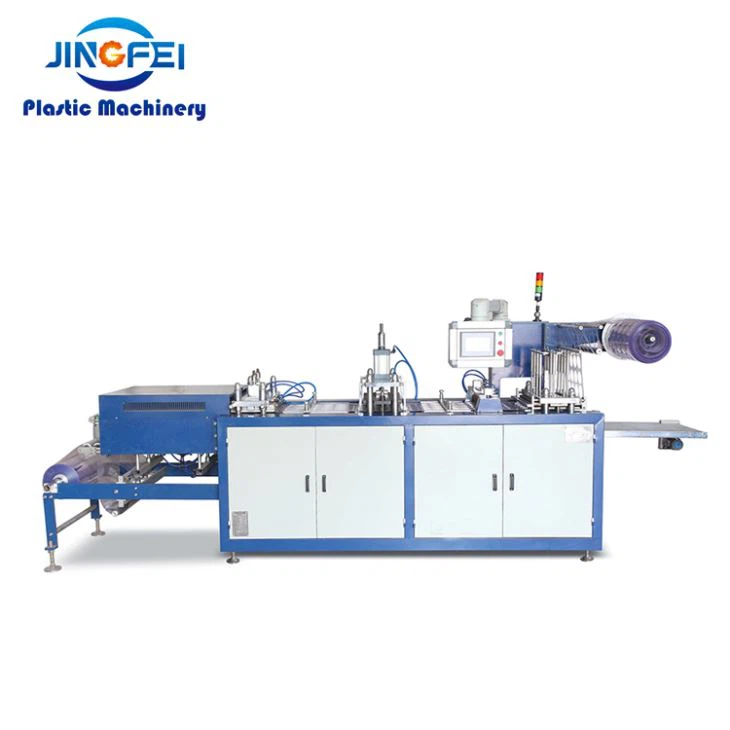
The heart and soul of Flat Lid Thermoforming is, of course, the thermoforming machine. This is where the magic happens. The thermoforming machine takes the plastic sheet from the extruder and shapes it into flat lids. There are several steps involved in this process.
First, the plastic sheet is heated to its forming temperature. This makes the plastic soft and pliable. The heating can be done using various methods, such as infrared heaters or convection ovens. Once the sheet is heated, it's moved into the forming station. Here, a mold is used to shape the sheet into the desired flat lid design. The mold is usually made of aluminum or steel and has the exact shape of the lid.
There are two main types of thermoforming machines: vacuum thermoforming machines and pressure thermoforming machines. Vacuum thermoforming machines use suction to pull the heated plastic sheet onto the mold. It's a simple and cost-effective method, but it may not be suitable for very detailed or deep-drawn lids. Pressure thermoforming machines, on the other hand, use both vacuum and pressure to force the plastic sheet into the mold. This allows for more precise and complex lid designs. If you're looking for a Best Thermoforming Machine, there are some great options out there that offer high precision and efficiency.
Trimming Machine
After the flat lids are formed, they usually have excess plastic around the edges. That's where the trimming machine comes in. The trimming machine cuts off the excess plastic, giving the lids a clean and professional look. There are different types of trimming machines, such as die-cutting machines and laser cutting machines.
Die-cutting machines use a sharp die to cut the lids. The die is designed to match the shape of the lid, and it punches through the plastic sheet to remove the excess material. Laser cutting machines, on the other hand, use a high-powered laser beam to cut the lids. Laser cutting is more precise and can create very intricate designs, but it's also more expensive.
Quality Control Equipment
Quality control is super important in Flat Lid Thermoforming. You want to make sure that the lids you produce meet the highest standards. That's why you need some quality control equipment.
One of the most important pieces of quality control equipment is the thickness gauge. This device measures the thickness of the plastic sheet and the formed lids. It ensures that the lids have the correct thickness, which is crucial for their strength and functionality. Another important tool is the visual inspection system. This can be a simple magnifying glass or a more advanced automated vision system. It helps you detect any surface defects, such as scratches, bubbles, or discoloration.
Auxiliary Equipment
In addition to the main equipment, there are also some auxiliary equipment that can make the Flat Lid Thermoforming process more efficient and effective.
For example, a conveyor system can be used to move the plastic sheets and formed lids between different machines. This saves time and reduces the need for manual handling. A cooling system is also important to cool down the formed lids quickly after they're trimmed. This helps to set the shape of the lids and prevent them from deforming.

Comparison with Injection Moulding
You might be wondering how Flat Lid Thermoforming compares to Injection Moulding Machine. Well, both are popular methods for manufacturing plastic products, but they have some key differences.
Injection molding is a process where molten plastic is injected into a mold cavity under high pressure. It's great for producing complex and detailed parts with high precision. However, it requires expensive molds and has a higher setup cost. Flat Lid Thermoforming, on the other hand, is more cost-effective for producing flat or shallow parts like lids. It has a lower tooling cost and can be set up more quickly. So, depending on your production needs and budget, you can choose the method that's right for you.
Conclusion
So, there you have it! That's all the equipment you need for Flat Lid Thermoforming. From the plastic sheet extruder to the quality control equipment, each piece plays a crucial role in the process. If you're in the market for Flat Lid Thermoforming equipment, I'd love to have a chat with you. Whether you're just starting out or looking to upgrade your existing setup, I can help you find the right equipment for your needs. Feel free to reach out and let's start a conversation about your Flat Lid Thermoforming project.
References
- Modern Plastics Encyclopedia.
- Thermoforming Handbook.


