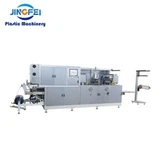
Yo, what's up everyone! I'm a supplier of PP thermoforming machines, and today I wanna chat about something that's been on a lot of folks' minds: What is the minimum thickness of PP sheet that a PP thermoforming machine can process?
First off, let's get a bit of background. PP, or polypropylene, is a super popular plastic. It's tough, it's flexible, and it's used in tons of stuff, from food packaging to automotive parts. Thermoforming is a process where you heat up a plastic sheet until it's soft, then you use a mold to shape it into whatever you need. It's a pretty cool way to make all sorts of products.
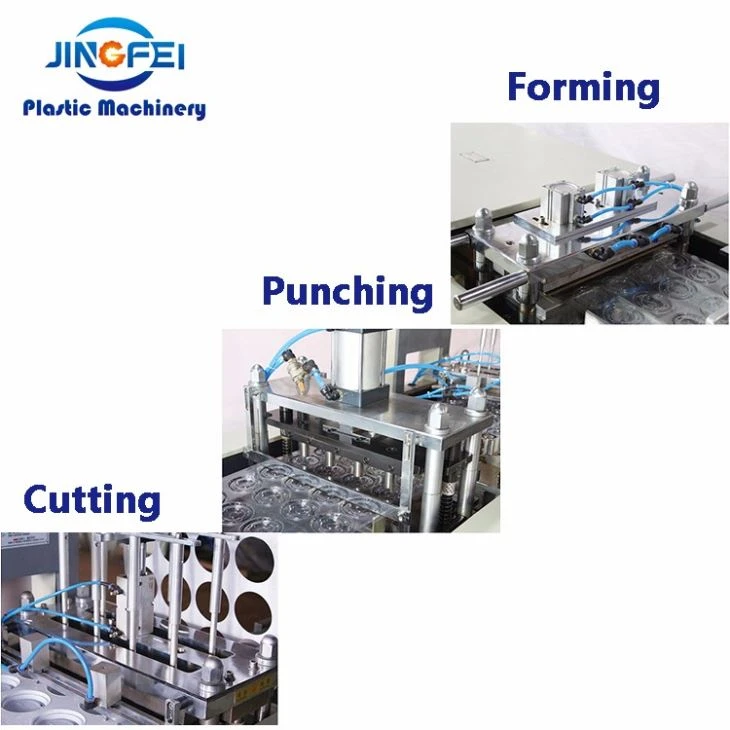
Now, the minimum thickness of a PP sheet that a thermoforming machine can handle depends on a bunch of factors. One of the big ones is the type of thermoforming machine you're using. There are different kinds out there, like the Thermoforming Machine For Food Packaging. This type is often used for making things like trays and containers for food. It's designed to work with a certain range of sheet thicknesses.
In general, most modern PP thermoforming machines can handle sheets as thin as 0.1 mm. That's pretty thin, right? But it's not always that simple. If you're using a really thin sheet, you might run into some issues. For example, the sheet might not heat up evenly. When you're thermoforming, you need the plastic to be soft enough to mold, but if it doesn't heat evenly, parts of it might be too hard while others are too soft. This can lead to defects in the final product, like uneven walls or holes.
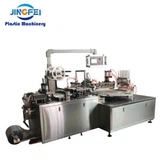
Another factor that affects the minimum thickness is the complexity of the shape you're trying to make. If you're making a simple, flat tray, you can probably get away with a thinner sheet. But if you're trying to make something with lots of details, like a Cup Lid forming Machine Small Size might produce, you might need a thicker sheet. That's because the plastic needs to be strong enough to hold its shape during the forming process and after it cools down.
The quality of the PP sheet also matters. Cheaper, lower - quality sheets might not perform as well at thin thicknesses. They could have impurities or inconsistent properties, which can cause problems during thermoforming. Higher - quality sheets are more likely to heat evenly and form properly, even at thinner gauges.
The heating system of the thermoforming machine is crucial too. A good heating system can ensure that the PP sheet is heated uniformly across its surface. Some machines use infrared heaters, which can be very effective at heating the plastic quickly and evenly. Others might use different types of heating elements. If the heating system isn't up to par, you might not be able to process thinner sheets successfully.
Let's talk about the cooling process. After the sheet is formed into the desired shape, it needs to cool down quickly to set the shape. If the sheet is too thin, it might cool down too fast, which can cause stress in the plastic. This stress can lead to warping or cracking in the final product. On the other hand, if it cools down too slowly, the plastic might lose its shape before it's fully set.
Now, if you're in the market for a thermoforming machine, you might also be considering a Plastic Injection Molding Machine. Injection molding is a different process, but it's also used to make plastic products. The main difference is that in injection molding, molten plastic is injected into a mold, while in thermoforming, a pre - made sheet is heated and formed. Each process has its own advantages and disadvantages, and the choice between them often depends on the type of product you're making and the volume of production.
So, to sum it up, while most PP thermoforming machines can technically process sheets as thin as 0.1 mm, the actual minimum thickness that works well for you depends on a bunch of things. These include the type of machine, the complexity of the shape, the quality of the sheet, the heating system, and the cooling process.
If you're thinking about getting into thermoforming or upgrading your current setup, I'd be more than happy to help. Whether you're looking for a machine that can handle thin sheets for delicate products or a more heavy - duty machine for larger - scale production, I've got the knowledge and the equipment to meet your needs. Just reach out, and we can have a chat about what would work best for you.
References

- General knowledge of thermoforming processes and plastic materials.
- Industry experience in supplying PP thermoforming machines.