

As a seasoned supplier of mold spare parts, I've witnessed firsthand the pivotal role that retaining rings play in the functionality and longevity of various molds. Retaining rings, seemingly simple components, are integral to the seamless operation of molds used in a wide range of industries, from automotive to consumer goods. In this blog, I'll delve into the functions of retaining rings in mold spare parts, highlighting their importance and the value they bring to different types of molds.
Securing Components in Place
One of the primary functions of retaining rings in mold spare parts is to secure other components within the mold assembly. In a Punching Mold, for example, retaining rings are used to hold punches, die buttons, and other critical components firmly in place. These components are subjected to high levels of force and stress during the punching process, and without proper securing, they could shift or become misaligned, leading to inaccurate punching and potential damage to the mold.
Retaining rings provide a reliable and cost - effective solution for securing these components. They are designed to fit precisely into grooves or recesses in the mold, creating a tight and stable connection. This ensures that the punches and die buttons remain in their correct positions, allowing for consistent and accurate punching operations.
Preventing Axial Movement
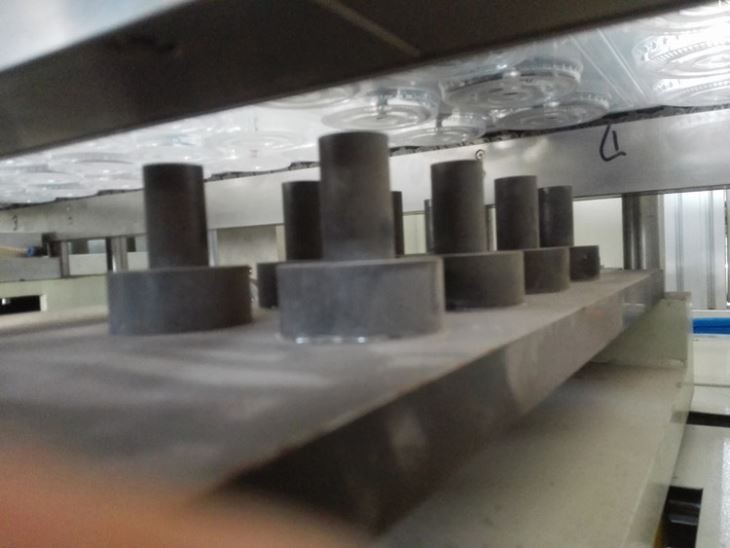
In addition to securing components radially, retaining rings also prevent axial movement of parts within the mold. In a Forming Mold for Thermoforming Machine, various components such as cores, inserts, and ejector pins need to be held in place along the axis of the mold. Retaining rings are used to restrict the movement of these parts, ensuring that they do not slide out of position during the thermoforming process.
During thermoforming, the mold is subjected to high temperatures and pressures, which can cause components to expand or contract. Retaining rings help to compensate for these dimensional changes by maintaining a constant grip on the components. This is crucial for maintaining the integrity of the formed parts and preventing defects such as warping or uneven thickness.
Facilitating Easy Assembly and Disassembly
Another significant advantage of using retaining rings in mold spare parts is that they facilitate easy assembly and disassembly of the mold. Unlike traditional fasteners such as bolts and nuts, retaining rings can be installed and removed quickly without the need for special tools. This is particularly important in industries where molds need to be frequently changed or repaired.
In a Cutting Mold, for instance, the cutting blades may need to be replaced periodically due to wear and tear. Retaining rings allow for quick and easy removal of the blades, reducing downtime and increasing productivity. The ability to assemble and disassemble the mold efficiently also makes it easier to perform maintenance and inspection tasks, ensuring that the mold remains in optimal condition.
Reducing Friction and Wear
Retaining rings can also help to reduce friction and wear between components in the mold. By providing a smooth and even surface for contact, they minimize the abrasion and heat generation that can occur during the operation of the mold. This is especially important in high - speed or high - pressure applications, where excessive friction can lead to premature wear and failure of the components.
In a punching mold, for example, the retaining rings can act as a buffer between the punch and the die holder, reducing the direct contact and friction between these parts. This not only extends the lifespan of the components but also improves the quality of the punched parts by reducing burrs and other defects.
Ensuring Sealing and Containment
In some mold applications, retaining rings are used to ensure sealing and containment of fluids or gases. In a mold for manufacturing plastic parts with internal cavities, retaining rings can be used to seal the joints between different mold sections, preventing the leakage of molten plastic during the injection molding process.
Similarly, in a mold used for casting metal parts, retaining rings can be employed to contain the molten metal within the mold cavity, ensuring that the part is formed correctly and without any defects. This function of retaining rings is crucial for maintaining the quality and integrity of the molded parts.
Different Types of Retaining Rings for Mold Applications
There are several types of retaining rings available for mold applications, each with its own unique features and advantages. External retaining rings are designed to fit around the outside of a shaft or a cylindrical component, while internal retaining rings are used inside a bore or a housing.
Snap rings are a common type of retaining ring that are easy to install and remove. They are typically made of spring steel and have a circular shape with a gap in the ring. The gap allows the ring to be compressed and inserted into the groove, where it expands to provide a secure fit.
Spiral retaining rings are another type of retaining ring that are wound from a continuous strip of material. They offer a high degree of flexibility and can be easily adjusted to fit different sizes of grooves. Spiral retaining rings are often used in applications where a large number of components need to be retained.
Conclusion
In conclusion, retaining rings are essential components in mold spare parts, performing a variety of functions that are crucial for the proper operation and longevity of molds. From securing components and preventing axial movement to facilitating easy assembly and disassembly, retaining rings play a vital role in ensuring the accuracy, efficiency, and quality of the molding process.
As a supplier of mold spare parts, I understand the importance of providing high - quality retaining rings that meet the specific requirements of different mold applications. Whether you are in the market for a Punching Mold, a Forming Mold for Thermoforming Machine, or a Cutting Mold, I can offer a wide range of retaining rings to suit your needs.
If you are interested in learning more about our mold spare parts, including retaining rings, or if you have any questions regarding your specific mold requirements, I encourage you to reach out. We are here to assist you in finding the best solutions for your molding operations. Let's start a conversation about how our products can enhance the performance of your molds and improve your overall manufacturing process.

References
- "Mold Design Handbook" by Peter F. Ostergren
- "Manufacturing Engineering and Technology" by Serope Kalpakjian and Steven R. Schmid
- Industry whitepapers on mold spare parts and retaining ring applications


