

Hey there! As a supplier of Thermoforming Machines, I've seen my fair share of issues with thermoformed products. One of the most common problems that manufacturers face is non-uniformity in these products. In this blog, I'll dig into what causes this non-uniformity and how we can potentially deal with it.
1. Material Variations
Let's start with the materials. Different batches of plastic sheets used in thermoforming can vary in terms of their composition and properties. For example, the density, thickness, and even the moisture content can differ from one batch to another. If you're using a sheet with inconsistent thickness, it's going to heat up and cool down at different rates across its surface. This uneven heating and cooling leads to non-uniform stretching during the thermoforming process, resulting in products with inconsistent wall thickness.
Also, the type of plastic matters a lot. Some plastics have better thermal conductivity than others. For instance, polycarbonate has different heat transfer characteristics compared to PVC. If you switch between these materials without adjusting your thermoforming machine settings, you're likely to end up with non-uniform products. And don't forget about the additives in the plastic. UV stabilizers, colorants, and flame retardants can all affect how the plastic behaves during thermoforming.
2. Temperature Inconsistencies
Temperature is a crucial factor in thermoforming. If the heating elements in your Thermal Vacuum Forming Machine aren't working properly, you'll get uneven heating of the plastic sheet. Some parts of the sheet might be too hot, while others are not hot enough. This can happen if the heating elements are old and worn out, or if there's a problem with the temperature control system.
The distance between the heating elements and the plastic sheet also plays a role. If the sheet is too close to one set of elements and too far from another, the heating will be uneven. And the heating time matters as well. If you heat the sheet for too short a time, it won't be soft enough to stretch uniformly. On the other hand, overheating can cause the plastic to degrade in some areas, leading to non-uniformity.

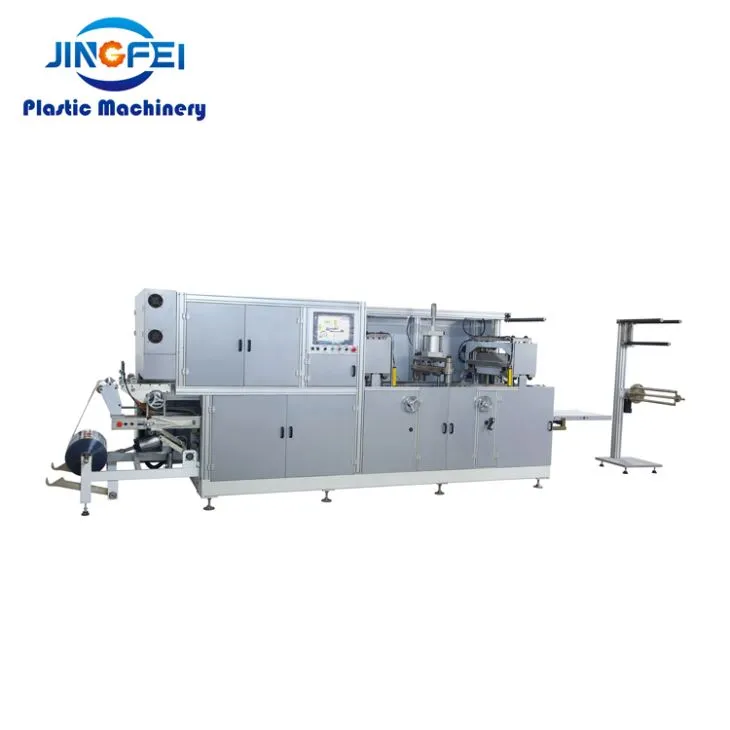
3. Machine-Related Factors
Now, let's talk about the thermoforming machine itself. The clamping system is important. If the plastic sheet isn't clamped firmly and evenly, it can shift during the forming process. This shifting can cause uneven stretching and result in non-uniform products. For example, if one side of the sheet is looser than the other, it will stretch more easily, leading to a thinner wall on that side.
The mold design is another key factor. A poorly designed mold can cause non-uniformity. If the mold has sharp corners or uneven surfaces, the plastic might not flow evenly into all the areas of the mold. This can lead to thin spots or thick spots in the final product. Also, the venting in the mold is crucial. If there aren't enough vents or if they're blocked, air can get trapped between the plastic sheet and the mold. This trapped air can prevent the plastic from conforming properly to the mold, causing non-uniformity.
Our Automatic Three Station Thermoforming Machine is designed to minimize these machine-related issues. It has a precise clamping system and well-designed molds that help ensure more uniform thermoforming. But even with the best machines, proper maintenance is essential. If you don't clean the machine regularly, debris can build up on the heating elements or in the mold, affecting the thermoforming process.
4. Stretching and Cooling
During the stretching phase, the way you stretch the plastic sheet can cause non-uniformity. If the stretching is too fast or too slow, or if it's not done evenly in all directions, the final product will be affected. For example, if you stretch the sheet more in one direction than another, the wall thickness will vary accordingly.
Cooling is just as important as heating. If the cooling process is uneven, the plastic will shrink at different rates in different areas. This can lead to warping and non-uniform dimensions. For instance, if one side of the product cools faster than the other, it will shrink more, causing the product to bend.
5. Operator Error
Let's not forget about the human factor. Operators need to be well-trained to use the thermoforming machine correctly. If they don't set the right temperature, pressure, or stretching parameters, non-uniformity is likely to occur. For example, an operator might not notice that the heating elements are not working properly and continue to run the machine without making adjustments.
Also, operators need to handle the plastic sheets carefully. If they touch the sheet with dirty hands or if they place it on a dirty surface before loading it into the machine, contaminants can get on the sheet. These contaminants can affect the heating and stretching properties of the plastic, leading to non-uniform products.
How to Minimize Non-Uniformity
To minimize non-uniformity in thermoformed products, you need to take a comprehensive approach. First, make sure you're using high-quality, consistent plastic sheets. Test different batches before using them in large-scale production to ensure they have similar properties.
Regularly maintain your thermoforming machine. Check the heating elements, temperature control system, clamping system, and molds. Clean the machine regularly to prevent debris buildup.
Train your operators well. Make sure they understand the importance of setting the right parameters and handling the plastic sheets properly.
If you're considering upgrading your thermoforming equipment, our Small Injection Molding Machine might be a great option. It offers more precise control over the thermoforming process, which can help reduce non-uniformity.
In conclusion, non-uniformity in thermoformed products can be caused by a variety of factors, including material variations, temperature inconsistencies, machine-related issues, stretching and cooling problems, and operator error. By understanding these causes and taking the necessary steps to address them, you can improve the quality of your thermoformed products.
If you're facing issues with non-uniformity in your thermoformed products or if you're interested in upgrading your thermoforming equipment, don't hesitate to reach out. We're here to help you find the best solutions for your manufacturing needs. Let's have a chat and see how we can work together to improve your thermoforming process.
References
- "Thermoforming Handbook" by John W. McGarry
- "Plastics Processing: Modeling and Simulation" by Johannes Karl Fink


