

Hey there! As a supplier of Punching Mold, I've seen my fair share of worn - out, damaged, and malfunctioning punching molds. In this blog, I'm gonna share with you some common repair methods for a punching mold.
1. Surface Wear Repair
The first and most common issue with punching molds is surface wear. Over time, the constant friction between the mold and the material being punched causes the surface of the mold to wear down. This can lead to poor punching quality, such as rough edges on the punched parts or inaccurate hole sizes.
One of the simplest ways to repair surface wear is by grinding and polishing. You can use a grinding wheel to remove the worn - out layer on the mold surface. After grinding, a fine polishing process is crucial to make the surface smooth again. This not only restores the punching performance but also extends the life of the mold.
For more severe cases of surface wear, you can consider plating the mold surface. There are different types of plating, like chrome plating. Chrome plating creates a hard and smooth surface on the mold. It can reduce friction and enhance the mold's resistance to wear. By doing so, it can greatly improve the punching quality and ensure that the mold can work efficiently for a longer period. You can find high - quality Punching Mold on our website, which are designed to resist wear and tear.
2. Cracking Repair
Cracks in a punching mold are a serious problem. They can start small but can quickly grow and cause the mold to break completely. Cracks usually occur due to excessive stress on the mold during the punching process or thermal stress from repeated heating and cooling.
When dealing with small cracks, you can use a process called welding repair. First, you need to clean the crack area thoroughly to remove any dirt, debris, or oxide layers. Then, select a suitable welding rod that matches the material of the mold. Welding should be done carefully, following the correct welding parameters to avoid further damage to the mold. After welding, the area needs to be heat - treated to relieve the internal stress caused by welding.
For large cracks, it may be more difficult to repair. In some cases, it might be more cost - effective to replace the damaged parts of the mold. We offer a wide range of spare parts for Punching Mold on our website, which makes it convenient for you to replace the damaged components.
3. Die - Offset Repair
Die - offset is another common problem in punching molds. It occurs when the punch and the die are not aligned properly. This can result in misaligned holes, increased wear on the mold, and even damage to the punching machine.
To detect die - offset, you can use some simple measuring tools like a dial indicator. First, measure the clearance between the punch and the die at different points. If there are significant differences in the clearance, it indicates a die - offset problem.
To repair die - offset, you need to adjust the position of the punch or the die. This can be done by loosening the fixing screws and carefully moving the punch or the die to the correct position. After the adjustment, re - measure the clearance to ensure that it is uniform around the entire perimeter. If the issue persists, you may need to check the installation of the mold on the punching machine and make sure that it is firmly and correctly installed.
4. Chip - Clogging Repair
Chip - clogging often happens when punching materials that produce a large amount of chips, like some metals. When chips get stuck in the mold, it can cause blockages, which affect the punching process and may even damage the mold.
To prevent and repair chip - clogging, you can improve the chip - removal design of the mold. For example, you can add more chip - removal holes or grooves on the mold surface. These channels can help the chips flow out smoothly during the punching process.
Regular cleaning is also essential. You can use compressed air or a brush to remove the chips from the mold after each punching operation. In some cases, using a coolant or lubricant can also help reduce chip - clogging. The coolant can wash away the chips and at the same time reduce the friction between the mold and the material, which is beneficial for the overall performance of the punching process.
5. Spring and Stripper Plate Repair
The springs and stripper plates in a punching mold play important roles. The springs provide the necessary force for the stripper plate to remove the punched part from the punch. If the springs are worn out or broken, the stripper plate may not function properly, which can lead to parts getting stuck on the punch.
To repair the springs, you need to replace the worn - out or broken ones with new springs of the same specification. Make sure to choose high - quality springs to ensure reliable performance.

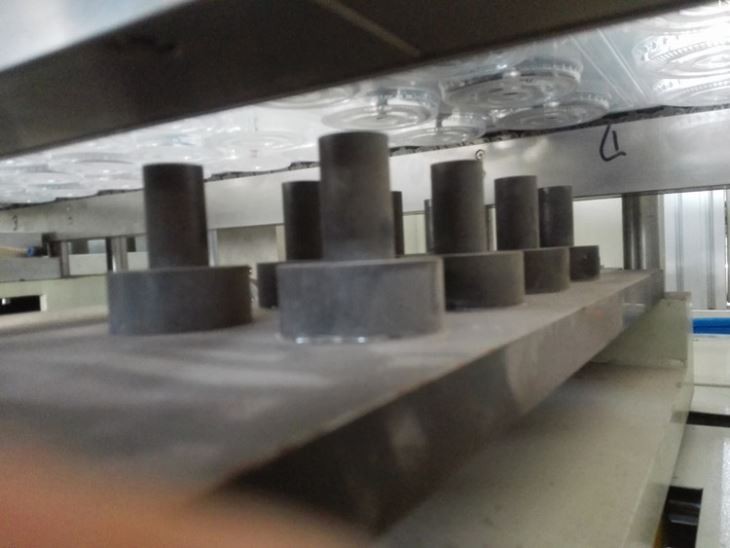
For the stripper plate, if it is damaged, you can repair it by machining or replacing the damaged parts. The surface of the stripper plate should be smooth and flat to ensure proper contact with the punched part. A well - functioning stripper plate and springs are crucial for the smooth operation of the punching mold.
6. Case Studies and Examples
Let me share a real - life example. One of our customers was experiencing poor punching quality with their existing punching mold. After a detailed inspection, we found that there was significant surface wear on the mold. We recommended a chrome - plating repair method. After the repair, the customer noticed a huge improvement in the punching quality. The edges of the punched parts became smooth, and the accuracy of the hole sizes was also greatly enhanced.
Another case involved a die - offset problem. A customer's punching machine was producing misaligned parts, which affected the final product quality. We used a dial indicator to measure the die - offset and then adjusted the position of the punch. After the adjustment, the punching quality was restored, and the customer was able to continue their production smoothly.
Conclusion
Repairing a punching mold is a complex but necessary task. By understanding these common repair methods, you can effectively extend the life of your punching mold, improve punching quality, and save costs. Whether it's surface wear, cracking, die - offset, chip - clogging, or issues with springs and stripper plates, there are solutions available.
If you're facing problems with your punching mold and need professional advice or high - quality spare parts, don't hesitate to kick - start a conversation with us. We are more than willing to assist you in finding the best solutions for your punching mold needs. Explore more about our Forming Mold for Thermoforming Machine and Cutting Mold as well on our website.
References
- "Tool and Die Making Handbook"
- "Punching and Forming Technology"
- Various industry reports and research papers on mold repair and maintenance.


