As a dedicated supplier of auxiliary machines, I've witnessed firsthand the transformative impact these machines have on the mining industry. Auxiliary machines play a crucial role in enhancing efficiency, safety, and productivity in mining operations. In this blog post, I'll delve into some of the key application cases of auxiliary machines in the mining industry, highlighting their significance and the benefits they bring.
Ventilation Systems
Ventilation is of utmost importance in mining operations to ensure the safety and well - being of miners. Auxiliary ventilation machines, such as fans, are used to provide fresh air to underground mines and remove harmful gases, dust, and fumes.
In large underground mines, axial fans are commonly employed. These fans are capable of moving large volumes of air over long distances. They are installed in ventilation shafts or along the mine tunnels to create a continuous flow of air. This not only helps in maintaining oxygen levels but also reduces the risk of explosions caused by the accumulation of flammable gases like methane.
Centrifugal fans, on the other hand, are often used for local ventilation. They can be placed near work areas where there is a high concentration of dust or fumes, such as in blasting zones or near ore - processing equipment. By directing the airflow towards these areas, they effectively remove contaminants and create a safer working environment.
Our company offers a range of high - performance ventilation fans that are designed to meet the specific requirements of mining operations. These fans are built with durable materials to withstand the harsh conditions underground and are energy - efficient, reducing operational costs.
Compression Systems
Compressed air is an essential utility in the mining industry, and oil - free air compressors are widely used. You can learn more about our Oil Free Air Compressor and Oil Free Air Compressor Factory on our website.
In mining, compressed air is used for various applications. One of the primary uses is in pneumatic tools. Drills, rock breakers, and impact wrenches rely on compressed air to operate. These tools are used for tasks such as drilling holes for blasting, breaking up large rocks, and assembling and disassembling equipment.
Oil - free air compressors are preferred in mining because they eliminate the risk of oil contamination in the compressed air. This is crucial as oil - contaminated air can damage pneumatic tools, reduce their efficiency, and also pose a safety hazard in environments where there is a risk of fire or explosion.
Another application of compressed air is in ore - conveying systems. Air - operated conveyors use compressed air to move ore and other materials along the conveyor belts. This method is efficient and can handle large volumes of material, making it suitable for the high - throughput requirements of mining operations.
Crushing and Grinding Equipment
Crushing and grinding are essential steps in the ore - processing stage of mining. Auxiliary machines such as crushers and grinders are used to reduce the size of the mined ore to a more manageable size for further processing.
Jaw crushers are commonly used as primary crushers in mining. They are designed to handle large chunks of ore and break them down into smaller pieces. The jaw crusher operates by compressing the ore between two jaws, one fixed and one movable. This simple yet effective design allows for high - capacity crushing.

After the primary crushing, cone crushers or impact crushers are often used for secondary and tertiary crushing. These crushers further reduce the size of the ore particles, preparing them for the grinding stage.
Grinding mills, such as ball mills and rod mills, are used to grind the crushed ore into a fine powder. This is necessary for the subsequent extraction of valuable minerals from the ore. The grinding process increases the surface area of the ore, making it easier for chemical reagents to react with the minerals during the extraction process.
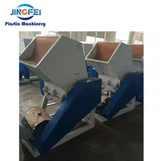
Our Automatic Plastic Granule Crusher with Big Capacity can also be used in the mining industry for recycling plastic components used in various mining equipment. This not only helps in waste management but also reduces the cost of purchasing new plastic parts.
Material Handling Equipment
Efficient material handling is crucial in mining operations to transport mined ore, waste rock, and other materials from one location to another. Auxiliary machines such as conveyor belts, trucks, and loaders play a vital role in this process.
Conveyor belts are the most commonly used material - handling equipment in mines. They can be used to transport materials over long distances, both horizontally and vertically. Conveyor belts are designed to be durable and can handle large volumes of material continuously. They are also energy - efficient compared to other forms of transportation, reducing the overall operating cost of the mine.
Trucks are used for short - distance transportation within the mine site. They are particularly useful for transporting materials from the mining face to the processing plant or the waste - disposal area. Articulated dump trucks are often preferred in mining as they have a high load - carrying capacity and can maneuver easily in rough terrain.
Loaders, such as front - end loaders and bucket loaders, are used to load materials onto trucks and conveyor belts. They are equipped with large buckets that can scoop up large amounts of ore or waste rock quickly and efficiently.
Water Management Systems
Water is both a valuable resource and a potential problem in mining operations. Auxiliary machines for water management are used to control water inflows, treat wastewater, and recycle water for reuse.
Pumps are the primary water - management equipment in mines. They are used to dewater the mine, removing water that seeps into the underground workings. This is important to prevent flooding, which can damage equipment, disrupt operations, and pose a safety risk to miners.
Submersible pumps are commonly used in underground mines as they can be placed directly in the water and are capable of handling large volumes of water. Surface pumps are used for above - ground water - management tasks, such as pumping water from storage ponds to the processing plant.
Wastewater treatment plants are also an important part of the water - management system in mines. These plants are used to treat the wastewater generated during mining operations, removing contaminants such as heavy metals, sediment, and chemicals. The treated water can then be reused in the mine, reducing the demand for fresh water and minimizing the environmental impact of the mining operation.
Conclusion
Auxiliary machines are indispensable in the mining industry. From ventilation systems that ensure the safety of miners to water - management systems that protect the environment, these machines play a crucial role in every aspect of mining operations.
As a supplier of auxiliary machines, we are committed to providing high - quality, reliable, and innovative solutions to the mining industry. Our products are designed to meet the specific needs of mining operations, offering improved efficiency, reduced costs, and enhanced safety.
If you are in the mining industry and are looking for high - performance auxiliary machines, we would love to hear from you. Whether you need ventilation fans, oil - free air compressors, crushing equipment, or any other auxiliary machine, our team of experts can provide you with the right solutions. Contact us to start a discussion about your requirements and explore how our products can benefit your mining operations.
References
- Hartman, H. L., & Mutmansky, J. M. (2002). Mining Engineering: An Introduction. Wiley.
- Singh, R. N., & Goel, R. K. (2012). Rock Mechanics and Underground Mining. Elsevier.
- Osanloo, M., & Ranjbar, M. (2011). Mine Planning and Design. Springer.