

Hey there! As a supplier of Punching Molds, I've seen my fair share of molds that wear out too quickly, and it's a real pain in the neck for both me and my customers. That's why I'm here to share some tips on how to improve the durability of a punching mold. Whether you're a small business owner or a large manufacturer, these tips can help you get the most out of your investment and keep your production running smoothly.
Choose the Right Material
The first step in improving the durability of a punching mold is to choose the right material. There are several factors to consider when selecting a material, including the type of material you'll be punching, the thickness of the material, and the volume of production.
For high-volume production, you'll want to choose a material that can withstand repeated use without wearing down too quickly. Tool steels, such as D2 and A2, are popular choices for punching molds because they're hard, wear-resistant, and can hold their shape under high stress. Carbide is another option for high-volume production, especially when punching hard materials like stainless steel or titanium. Carbide is extremely hard and wear-resistant, but it's also brittle and can crack if not handled properly.
If you're punching softer materials like aluminum or copper, you may be able to get away with using a less expensive material like carbon steel. Carbon steel is relatively soft and easy to machine, but it doesn't hold up as well under high stress as tool steel or carbide.
Heat Treatment
Once you've chosen the right material for your punching mold, the next step is to heat treat it. Heat treatment is a process that involves heating the material to a specific temperature and then cooling it at a controlled rate to change its properties. The goal of heat treatment is to make the material harder, stronger, and more wear-resistant.
There are several different types of heat treatment processes, including annealing, quenching, and tempering. Annealing is a process that involves heating the material to a high temperature and then cooling it slowly to relieve internal stresses and make the material more ductile. Quenching is a process that involves heating the material to a high temperature and then cooling it rapidly to make it harder. Tempering is a process that involves heating the material to a lower temperature after quenching to reduce its brittleness and make it more tough.
The specific heat treatment process you choose will depend on the type of material you're using and the properties you want to achieve. It's important to work with a reputable heat treatment provider who has experience working with punching molds to ensure that the heat treatment is done correctly.
Surface Treatment
In addition to heat treatment, you may also want to consider surface treatment for your punching mold. Surface treatment is a process that involves applying a coating or treatment to the surface of the mold to improve its properties. There are several different types of surface treatments available, including nitriding, chrome plating, and PVD coating.
Nitriding is a process that involves diffusing nitrogen into the surface of the mold to form a hard, wear-resistant layer. Nitriding can improve the mold's resistance to wear, corrosion, and galling. Chrome plating is a process that involves depositing a layer of chromium onto the surface of the mold to improve its hardness, wear resistance, and corrosion resistance. PVD coating is a process that involves depositing a thin layer of metal or ceramic onto the surface of the mold using physical vapor deposition. PVD coating can improve the mold's hardness, wear resistance, and release properties.
The specific surface treatment you choose will depend on the type of material you're using, the type of punching operation you're performing, and the properties you want to achieve. It's important to work with a reputable surface treatment provider who has experience working with punching molds to ensure that the surface treatment is done correctly.
Proper Design
Another important factor in improving the durability of a punching mold is proper design. A well-designed punching mold will distribute the stress evenly across the mold, reduce the risk of cracking and deformation, and make it easier to maintain and repair.
When designing a punching mold, it's important to consider the following factors:

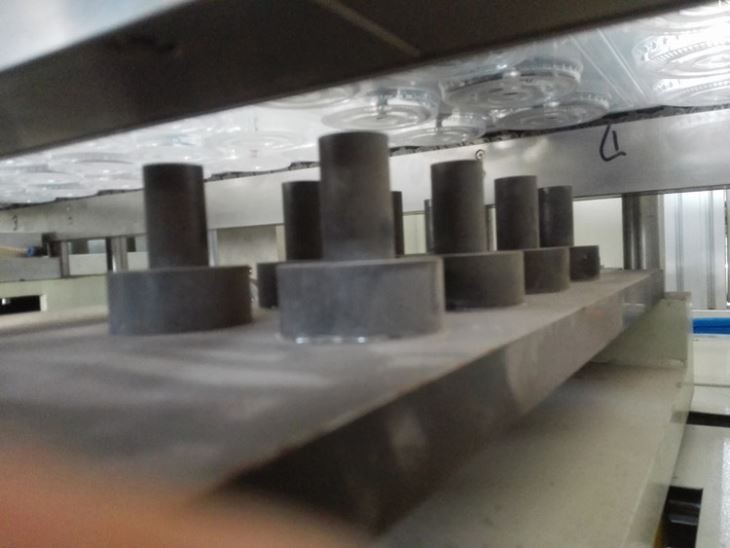
- Clearance: The clearance between the punch and the die is critical for ensuring proper punching performance and reducing wear on the mold. Too much clearance can cause the material to deform and tear, while too little clearance can cause the punch to stick and wear out quickly.
- Rake Angle: The rake angle of the punch is the angle between the cutting edge of the punch and the vertical axis. A positive rake angle can help to reduce the cutting force and improve the punching performance, while a negative rake angle can help to increase the strength and durability of the punch.
- Radius: The radius of the cutting edge of the punch and the die can also affect the punching performance and the durability of the mold. A sharp cutting edge can cause the material to tear and wear out the mold quickly, while a rounded cutting edge can help to reduce the cutting force and improve the punching performance.
- Ventilation: Proper ventilation is important for removing heat and debris from the punching area and preventing the mold from overheating and wearing out quickly.
Maintenance and Repair
Finally, it's important to maintain and repair your punching mold regularly to ensure its durability. Regular maintenance can help to prevent problems before they occur and extend the life of the mold.
Some tips for maintaining and repairing your punching mold include:
- Cleaning: Regularly clean the mold to remove dirt, debris, and lubricant. Use a soft brush and a mild cleaning solution to avoid scratching the surface of the mold.
- Lubrication: Apply a lubricant to the punch and the die to reduce friction and wear. Use a lubricant that is specifically designed for punching operations and follow the manufacturer's recommendations for application.
- Inspection: Regularly inspect the mold for signs of wear, damage, or deformation. Look for cracks, chips, and other defects that could affect the punching performance or the durability of the mold.
- Repair: If you notice any signs of wear, damage, or deformation, repair the mold as soon as possible. Small repairs can often be made in-house, but more extensive repairs may require the services of a professional mold maker.
Conclusion
Improving the durability of a punching mold is essential for ensuring the efficiency and profitability of your punching operations. By choosing the right material, heat treating and surface treating the mold, designing it properly, and maintaining and repairing it regularly, you can extend the life of the mold and reduce the cost of replacement.
If you're in the market for a new punching mold or need help improving the durability of your existing mold, Punching Mold has a wide range of high-quality molds to choose from. We also offer a variety of services, including heat treatment, surface treatment, and mold repair, to help you get the most out of your investment.
So, what are you waiting for? Contact us today to learn more about our products and services and to get started on improving the durability of your punching mold.
References
- "Tool and Die Making Handbook" by Peter J. Ulintz
- "Metalworking: A Practical Guide" by Robert G. Fink
- "Manufacturing Engineering and Technology" by S. Kalpakjian and S. Rajagopal


