

Hey there! As a cutting mold supplier, I've seen firsthand how crucial accuracy is in the world of manufacturing. A precise cutting mold can make all the difference between a high - quality product and a subpar one. So, let's dive into how we can improve the accuracy of a cutting mold.

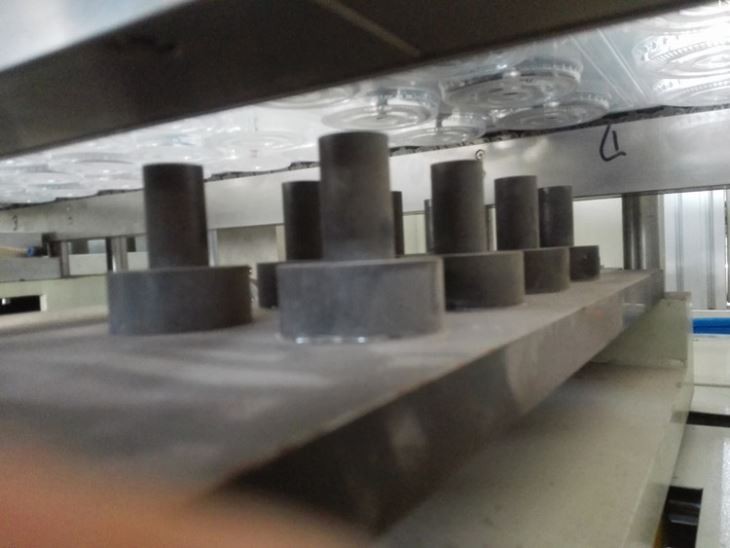
1. Material Selection
The first step in creating an accurate cutting mold is choosing the right materials. You know, not all materials are created equal. High - quality steel alloys are often the go - to for cutting molds. They offer excellent hardness, wear resistance, and dimensional stability. For instance, D2 tool steel is a popular choice. It can withstand high pressures and temperatures during the cutting process, which helps maintain the mold's shape and accuracy over time.
When you're sourcing materials, make sure to work with reliable suppliers. They can provide you with the exact specifications you need and ensure the quality of the materials. A good material supplier will also offer certifications, so you can be confident that you're getting what you pay for.
2. Precision Machining
Once you've got the right materials, precision machining is key. Modern machining techniques like CNC (Computer Numerical Control) machining have revolutionized the mold - making process. With CNC machines, we can achieve incredibly tight tolerances. These machines are programmed to cut and shape the mold with extreme accuracy, down to a few thousandths of an inch.
For example, when cutting the cavities and contours of a cutting mold, a CNC mill can follow a pre - designed digital model precisely. This reduces the chances of human error and ensures that each mold is identical to the design specifications. It's like having a super - accurate robot doing the hard work for you!
3. Heat Treatment
Heat treatment is another important aspect of improving mold accuracy. After machining, the mold needs to be heat - treated to enhance its mechanical properties. This process involves heating the mold to a specific temperature and then cooling it at a controlled rate.
There are different types of heat treatment, such as quenching and tempering. Quenching rapidly cools the mold, which increases its hardness. But this can also make the mold brittle. That's where tempering comes in. Tempering heats the mold to a lower temperature to relieve internal stresses and make it more ductile. By carefully controlling the heat - treatment process, we can ensure that the mold has the right balance of hardness and toughness, which is essential for maintaining its accuracy during use.
4. Surface Finishing
A smooth surface finish on the cutting mold is crucial for accuracy. Rough surfaces can cause friction, which can lead to uneven cutting and premature wear of the mold. To achieve a smooth finish, we use techniques like grinding and polishing.
Grinding removes any rough edges and imperfections left after machining. It creates a more uniform surface, which improves the mold's cutting performance. Polishing, on the other hand, takes the surface finish to the next level. It can reduce friction even further and prevent material from sticking to the mold. A well - polished mold not only cuts more accurately but also lasts longer.
5. Quality Control
Quality control is an ongoing process throughout the mold - making journey. We use a variety of inspection tools to ensure that the mold meets the required accuracy standards. Tools like coordinate measuring machines (CMMs) can measure the dimensions of the mold with high precision. They can detect even the slightest deviations from the design specifications.
Regular inspections at different stages of the manufacturing process help us catch any issues early on. For example, we can inspect the mold after machining, heat treatment, and surface finishing. By doing so, we can make any necessary adjustments before the mold is ready for use.
6. Maintenance and Calibration
Once the cutting mold is in use, proper maintenance and calibration are essential to keep it accurate. Regular cleaning is important to remove any debris or residue that can affect the mold's performance. Lubrication also helps reduce friction and wear.
Calibration is necessary to ensure that the mold is still cutting within the required tolerances. Over time, the mold may experience some wear and tear, which can cause its accuracy to decline. By regularly calibrating the mold, we can make any necessary adjustments to keep it cutting precisely.
7. Design Optimization
The design of the cutting mold itself plays a big role in its accuracy. A well - designed mold takes into account factors like the material being cut, the cutting forces, and the overall geometry of the part. For example, if we're cutting a complex - shaped part, the mold design should be optimized to ensure even distribution of cutting forces.
We can also use simulation software to test the mold design before manufacturing. This software can predict how the mold will perform under different conditions and help us identify any potential issues. By making design changes early on, we can improve the mold's accuracy and reduce the chances of costly rework.
8. Staff Training
Last but not least, having a well - trained staff is crucial. Our employees need to have a good understanding of the mold - making process, from material selection to quality control. Training programs can help them stay up - to - date with the latest techniques and technologies.
A skilled workforce can make better decisions during the manufacturing process, which can ultimately lead to more accurate cutting molds. For example, a trained machinist can operate the CNC machines more effectively, and a quality control inspector can detect issues more accurately.
In conclusion, improving the accuracy of a cutting mold involves a combination of factors, from material selection to staff training. By paying attention to each of these aspects, we can create cutting molds that are not only accurate but also durable and reliable.
If you're in the market for high - quality Cutting Mold, Punching Mold, or Forming Mold for Thermoforming Machine, I'd love to have a chat with you. We're committed to providing the best - in - class molds that meet your specific requirements. Don't hesitate to reach out for a procurement discussion.
References
- "Tool and Manufacturing Engineers Handbook", Society of Manufacturing Engineers.
- "Mold Design and Manufacturing: A Practical Guide", John Wiley & Sons.


