

As a provider of Punching Mold solutions, I understand the challenges and intricacies involved in designing a punching mold for irregular-shaped products. These types of products often present unique design requirements that need careful consideration. In this blog, I'll share a comprehensive guide on how to design a punching mold for irregular-shaped products, drawing on my years of experience in the industry.
Understanding the Product Requirements
The first step in designing a punching mold for irregular-shaped products is to thoroughly understand the product requirements. This includes the material of the product, its dimensions, tolerances, and the quantity to be produced. Different materials have varying properties, such as hardness, ductility, and elasticity, which can significantly affect the punching process. For example, punching a hard material like stainless steel may require a more robust mold design compared to a softer material like aluminum.
Accurate dimensions and tolerances are crucial for ensuring the final product meets the desired specifications. Irregular-shaped products often have complex geometries, so it's essential to have detailed 3D models or technical drawings. These will serve as the basis for the mold design and help in identifying any potential challenges early in the process. Additionally, the production quantity can influence the mold design and manufacturing process. High-volume production may require more durable molds and automated punching systems to increase efficiency.
Conducting a Feasibility Study
Once you have a clear understanding of the product requirements, the next step is to conduct a feasibility study. This involves evaluating whether it's possible to punch the irregular-shaped product using the available punching technology and equipment. Some factors to consider during the feasibility study include the punching force required, the accessibility of the punching area, and the potential for material deformation.
Calculating the punching force is crucial for determining the appropriate equipment and ensuring the mold can withstand the pressure. The punching force depends on several factors, including the material thickness, shear strength, and the perimeter of the punched shape. Advanced software tools can be used to simulate the punching process and estimate the punching force accurately.
Accessibility of the punching area is another critical factor. Irregular-shaped products may have protrusions or recesses that make it difficult to access certain areas for punching. In such cases, special tooling or multi-step punching processes may be required. Additionally, it's important to consider the potential for material deformation during punching. Irregular shapes can cause uneven stress distribution, leading to distortion or cracking of the material. Proper support and clamping mechanisms need to be designed to minimize these issues.

Designing the Mold Structure
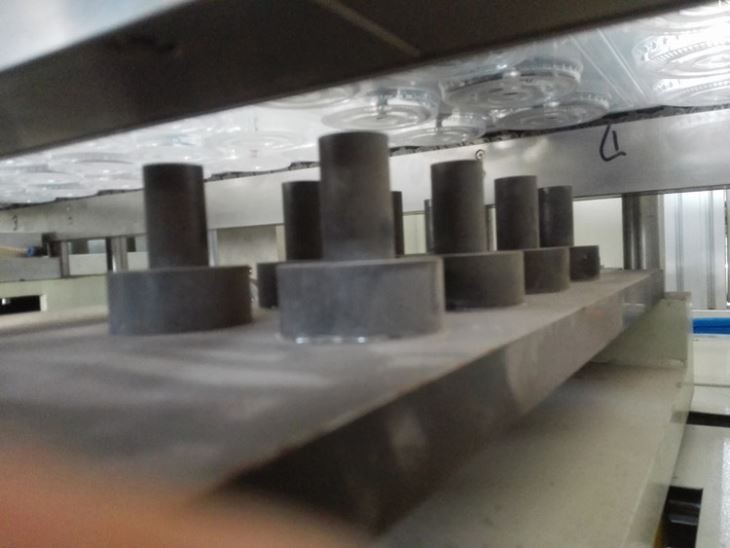
Based on the results of the feasibility study, the next step is to design the mold structure. The mold structure consists of several components, including the die, punch, stripper plate, and guide pins. Each component plays a crucial role in the punching process and needs to be carefully designed to ensure optimal performance.
The die is the stationary part of the mold that provides the shape for the punched product. It needs to be made of a hard and wear-resistant material, such as tool steel, to withstand the high pressures and repeated impacts during punching. The shape of the die should match the irregular shape of the product, and it should have a smooth surface finish to reduce friction and prevent the material from sticking.
The punch is the moving part of the mold that pushes the material through the die to create the punched shape. It also needs to be made of a hard and durable material, and its shape should be complementary to the die. The punch should have a sharp cutting edge to ensure clean and accurate punching.
The stripper plate is used to remove the punched material from the punch and prevent it from sticking. It should be designed to provide sufficient force to strip the material while not damaging the product. Guide pins are used to ensure the proper alignment of the punch and die, which is essential for accurate punching.
Selecting the Right Materials
Selecting the right materials for the mold components is crucial for ensuring the longevity and performance of the punching mold. As mentioned earlier, tool steel is a popular choice for the die and punch due to its high hardness, wear resistance, and toughness. However, different grades of tool steel have different properties, so it's important to choose the appropriate grade based on the specific requirements of the punching process.
In addition to tool steel, other materials may be used for the mold components, such as aluminum for the stripper plate or brass for the guide pins. These materials are chosen for their specific properties, such as lightweight, corrosion resistance, or low friction.
Incorporating Safety Features
Safety is a top priority in any manufacturing process, and punching mold design is no exception. When designing a punching mold for irregular-shaped products, it's important to incorporate safety features to protect the operators and prevent accidents.
Some common safety features include safety guards to prevent access to the punching area during operation, emergency stop buttons, and interlocks to ensure the machine only operates when all safety conditions are met. Additionally, the mold should be designed to minimize the risk of material ejection or flying debris, which can cause injury.
Prototyping and Testing
Before mass-producing the punching mold, it's advisable to create a prototype and conduct testing. The prototype allows you to evaluate the design and functionality of the mold and make any necessary adjustments. During testing, you can measure the punching force, the accuracy of the punched shape, and the quality of the final product.
If any issues are identified during testing, such as excessive material deformation or inaccurate punching, the mold design can be modified accordingly. This iterative process helps to ensure that the final mold meets the desired specifications and performs optimally.
Conclusion
Designing a punching mold for irregular-shaped products requires a combination of technical expertise, creativity, and attention to detail. By following the steps outlined in this blog, you can increase the chances of success in designing a high-quality punching mold that meets the specific requirements of your irregular-shaped products.
If you're in the market for a Punching Mold for your irregular-shaped products, or if you're looking for Cutting Mold and Forming Mold for Thermoforming Machine solutions, I'd be happy to discuss your requirements and provide you with a customized solution. Please feel free to reach out and initiate a procurement discussion. I look forward to hearing from you and helping you achieve your manufacturing goals.
References
- "Metal Forming Handbook: Processes and Applications" by G. E. Dieter
- "Tool and Manufacturing Engineers Handbook, Volume II: Forming" by The Society of Manufacturing Engineers


