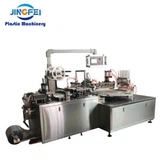
Hey there! As a supplier of PP thermoforming machines, I often get asked about how to adjust the temperature of these machines. It's a crucial aspect of the thermoforming process, and getting it right can make a huge difference in the quality of your final products. So, let's dive into it!
Understanding the Basics of Temperature in PP Thermoforming
First off, it's important to know why temperature matters so much in PP thermoforming. Polypropylene (PP) is a thermoplastic polymer, which means it softens when heated and hardens when cooled. In a thermoforming machine, we heat the PP sheet to a specific temperature where it becomes pliable enough to be shaped into the desired form.
If the temperature is too low, the PP sheet won't soften enough. This can lead to issues like incomplete forming, where the sheet doesn't fully take on the shape of the mold. You might end up with parts that are too thick in some areas and not formed at all in others. On the other hand, if the temperature is too high, the PP can become too soft. It might start to sag or even burn, resulting in products with a poor surface finish or structural integrity.
Factors Affecting Temperature Adjustment
There are several factors that you need to consider when adjusting the temperature of a PP thermoforming machine.
Type of PP Material
Not all PP materials are created equal. Different grades of PP have different melting points and thermal properties. For example, some PP grades are designed for high - temperature applications and can withstand more heat without deforming. Others are more heat - sensitive. So, before you start adjusting the temperature, you need to know the specific properties of the PP material you're using. You can usually find this information on the material's data sheet provided by the supplier.
Thickness of the PP Sheet
The thickness of the PP sheet also plays a big role. Thicker sheets require more heat to reach the right forming temperature. This is because heat needs to penetrate through the entire thickness of the sheet. If you're working with a thick sheet and you don't increase the temperature or the heating time accordingly, the inner layers of the sheet might not get hot enough, leading to poor forming results.
Machine Speed
The speed at which the thermoforming machine operates affects the temperature as well. If the machine is running at a high speed, the PP sheet spends less time in the heating zone. So, you might need to increase the temperature to ensure that the sheet reaches the required forming temperature in a shorter period. Conversely, if the machine is running slowly, you can lower the temperature a bit to avoid overheating the sheet.
Step - by - Step Guide to Temperature Adjustment
Now that we've covered the basics, let's go through a step - by - step guide on how to adjust the temperature of a PP thermoforming machine.
Step 1: Check the Manufacturer's Recommendations
The first thing you should do is refer to the machine's manual. The manufacturer usually provides recommended temperature settings based on different PP materials and sheet thicknesses. This is a great starting point. For example, if you're using a standard - grade PP sheet with a thickness of 2mm, the manual might suggest a starting temperature of around 160 - 180°C.


Step 2: Pre - Heat the Machine
Before you start working with the PP sheets, pre - heat the thermoforming machine to the recommended temperature. This ensures that the heating elements are at a stable temperature and ready to heat the sheets evenly. It usually takes a few minutes for the machine to reach the set temperature. You can monitor the temperature on the machine's control panel.
Step 3: Start with a Test Run
Once the machine is pre - heated, take a small piece of the PP sheet and run it through the thermoforming process. Observe the results carefully. Check if the sheet is forming properly. If it's not, you need to make adjustments to the temperature.
If the sheet is not forming well and seems too stiff, increase the temperature by about 5 - 10°C. Wait for the machine to reach the new temperature and run another test. Keep doing this until you get a good forming result.
If the sheet is sagging or burning, lower the temperature by the same amount and repeat the test.
Step 4: Fine - Tuning
After you get a good initial result, you might still need to fine - tune the temperature. Pay attention to the details of the formed products. If you notice that some parts of the product are not as well - formed as others, it could be due to uneven heating. You can adjust the temperature in different zones of the heating system if your machine has that feature. For example, if the edges of the formed product are not fully formed, you can increase the temperature in the edge - heating zones.
Using Advanced Temperature Control Systems
Many modern PP thermoforming machines come with advanced temperature control systems. These systems can make the temperature adjustment process much easier and more accurate.
PID Controllers
Proportional - Integral - Derivative (PID) controllers are commonly used in thermoforming machines. They continuously monitor the temperature and adjust the heating elements to maintain a stable temperature. PID controllers can automatically compensate for changes in the machine's operating conditions, such as variations in the incoming power or changes in the ambient temperature.
Infrared Temperature Sensors
Some machines are equipped with infrared temperature sensors. These sensors can measure the surface temperature of the PP sheet without making contact. This is very useful because it allows you to get real - time temperature readings of the sheet during the heating process. You can use this information to make more precise temperature adjustments.
Comparing with Other Machines
When it comes to plastic processing, there are other types of machines like Injection Moulding Machine and Fully Automatic Vacuum Forming Machine. While they all deal with plastic materials, the temperature control requirements are different.
Injection moulding machines work by injecting molten plastic into a mold. The temperature control in these machines is focused on keeping the plastic in a molten state during the injection process. The temperature needs to be high enough to ensure good flowability but not so high that the plastic degrades.
Fully automatic vacuum forming machines, similar to PP thermoforming machines, rely on heating a plastic sheet to a forming temperature. However, the specific temperature ranges can vary depending on the type of plastic used. For example, if you're using a different thermoplastic like polystyrene in a vacuum forming machine, the temperature requirements will be different from those of PP.
On the other hand, our PP Vacuum Forming Machine is specifically designed for PP materials. It has a heating system optimized for the thermal properties of PP, making it easier to achieve the right temperature for high - quality forming.
Conclusion
Adjusting the temperature of a PP thermoforming machine is a combination of understanding the material properties, considering the machine's operating conditions, and using the right temperature control techniques. By following the steps outlined above and taking advantage of advanced temperature control systems, you can ensure that your thermoforming process runs smoothly and produces high - quality PP products.
If you're in the market for a reliable PP thermoforming machine or have any questions about temperature adjustment or other aspects of thermoforming, don't hesitate to get in touch. We're here to help you make the most of your plastic processing operations. Contact us today to start a discussion about your specific needs and how our machines can meet them.
References
- "Plastics Processing Technology" by John A. Brydson
- Manufacturer's manuals of PP thermoforming machines